Essay
By Noam Backner
The Mad Dotar Player of Herat
Amin the Mad, the finest dotar player in Afghanistan, lived between the bazaar and the graveyard — and paid the stated price.
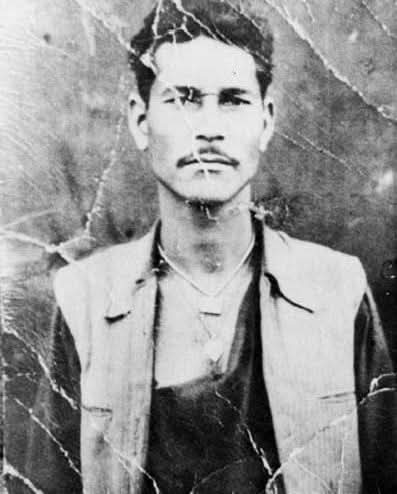
A few minutes before he breathed his last and released his soul to the unknown beyond, Amin plucked the melody "Shirat Efroni," after which his mother hung the dotar on the mud wall facing the deathbed of her beloved son.
Amin had earned the right to leave this world young only a few days earlier, in a dusty clash with five or six rough Kandaharis armed with clubs. Amin, for his part, made exclusive use of his favorite weapon — his seamless, solid head — in whose use he had specialized in the alleyways of Herat's southern bazaar. This time the headbutts failed to do their faithful work, and Amin was left terribly wounded in the belly, which swelled until it burst in his mother's house, where he ended his life just as he had begun it.
In his time, Amin was considered by many the finest dotar player in Afghanistan, and his nickname "Diwana" (Persian: "madman") was given to him on account of his eccentric, wild character, as well as his virtuosic musical ability. It was said of him that he could make the dotar sing or "scream" in a way that struck awe into other players, who in turn refused to perform in his presence.
Amin acquired his musical ability in his early youth, when, orphaned of his father, he worked cleaning pistachios and would slip away during rest hours to the teahouses of the Kandahar Gate, where musicians, day laborers, errand boys, and various combinations of these trades gathered. At first Amin plucked a village dotar, which, true to its name, carried a pair of goat-gut strings; in time he moved to an improved model that still bore the name dotar but already held three metal strings.
As a deserter, an idler, a cleaning worker on Pakistani trucks, a smuggler, and a professional thief, Amin loved and knew well the marginal worlds of Herat and the neighboring towns, and felt at home among the gangs of payluch — the barefoot ones — the charas smokers of Afghan society's fringes.
Amin apparently enjoyed the freedom his dubious social standing afforded him, as well as the prestige he earned through the celebrated dotar playing for which he was known. He would laze for long days in the teahouses of the Kandahar Gate, or wander the streets half-stoned, bare-chested and adorned with cheap jewelry — conduct exceptional by Afghanistan's traditional terms, yet one that sat well with being a musician from society's margins, and with the reputation he had acquired as "Diwana."
As we recall from the dawn of its days, Islam held a complex attitude toward the world of music. This complexity was expressed, on the one hand, in a positive view of musical practice as a tool for refining the soul and drawing it nearer to the divine, and on the other, in music as a Satanic instrument of seduction that harms the believer's soul. The debate over the legitimacy of musical practice was conducted among and between scholars, men of religion, jurists, and mystics, with the juristic discourse on music's permissibility anchored in the Quran and the hadith collections.
Thus argued, for example, the theologian Ibn al-Jawzi (died of boredom in 1200), that music is a Satanic tool for seducing the soul and enslaving it to passion, and that music arouses earthly desires and leads even to excessive drinking and fornication. That said, many men of religious law adopted a more balanced approach toward music, distinguishing between music whose purpose is the refinement and strengthening of faith, and frivolous, idle music that harms the believer's soul.
Among the great advocates of the use of music were the various Sufi orders, many of which made central use of instruments such as frame drums, flutes, and plucked strings during the dhikr and sama ceremonies, which aimed at mystical union with the Absolute.
Despite the positive — and at times even obligatory — attitude toward music in the Sufi ceremonies of some orders, the devotees' approach to religious music was not always direct and self-evident, and required prior preparation.
A passage from the Sufi training manual of Shahrudi holds that:
"Music arouses nothing in the heart that is not already there. Therefore, he whose heart clings to anything but God — music will attach him to earthly passions. But he whose inner being clings to the love of God, upon hearing the sounds, will act accordingly. Simple folk hear music in the way of nature; the lesser devotees hear it with passion and wonder; but the listening of the saints grants them a vision of heavenly gifts and graces… and finally there is the perfect listening, through which God reveals Himself without a veil."
Another place where music was assigned a special role in the Islamic world is the treatment of the mentally ill — a tradition that began with the writings of the Greeks, from which Muslims drew many translations, and continued until the threshold of the modern era in the Ottoman hospitals of Istanbul. Music was considered a first-rank tool for balancing the soul and drawing it closer to the world of God and mortals alike.
Toward the end of his twenties, Amin adopted an increasingly secluded way of life, and even moved his dwelling to the ziyarat, the many saints' tombs that dotted the Herat valley, until his fellow dotar players likened him to a "malang" — the Afghan term for the various dervishes and Sufi recluses who dwell in such places, with whom he used to keep company and smoke charas. It is even told that one day, as he played beside one of the sacred mud structures, the songbirds came down and perched on the neck of the dotar on which he was plucking.
Whether Amin found in music a balm for his stormy soul, a connection to higher realms, or mere amusement in a transient world — that we will probably never know.
Amin's choice to distance himself from society and from the narrow eyes of rival dotar players in the impulsive world of Herat's teahouses and market was not absolute; it was his tendency to move along the dark seam between the world of the city and the graveyards, between the bazaar and the alleyways behind it, and onward into the shadow world of social legitimacy — which in the end brought upon him his death in a brawl with marginal men like himself.
And yet, Amin's choice to live his life in utter freedom, impulsive and wild, strung like a cord between heaven and earth and between sanity and madness, until his terrible end, plucks at familiar themes in human experience, and resonates well with our ability to reach the very edge, if we so choose. But only if we are willing to pay the stated price.
Continue the conversation
A question, a correction, a source I should know about? Write to me privately — I read every note.
Send a noteField dispatches
New essays and journey announcements, a few times a year.