Essay
By Noam Backner
A Light Meal, Sichuan Style
A neighborhood buffet in Chengdu offers a generous reunion with the flavors of Sichuan.
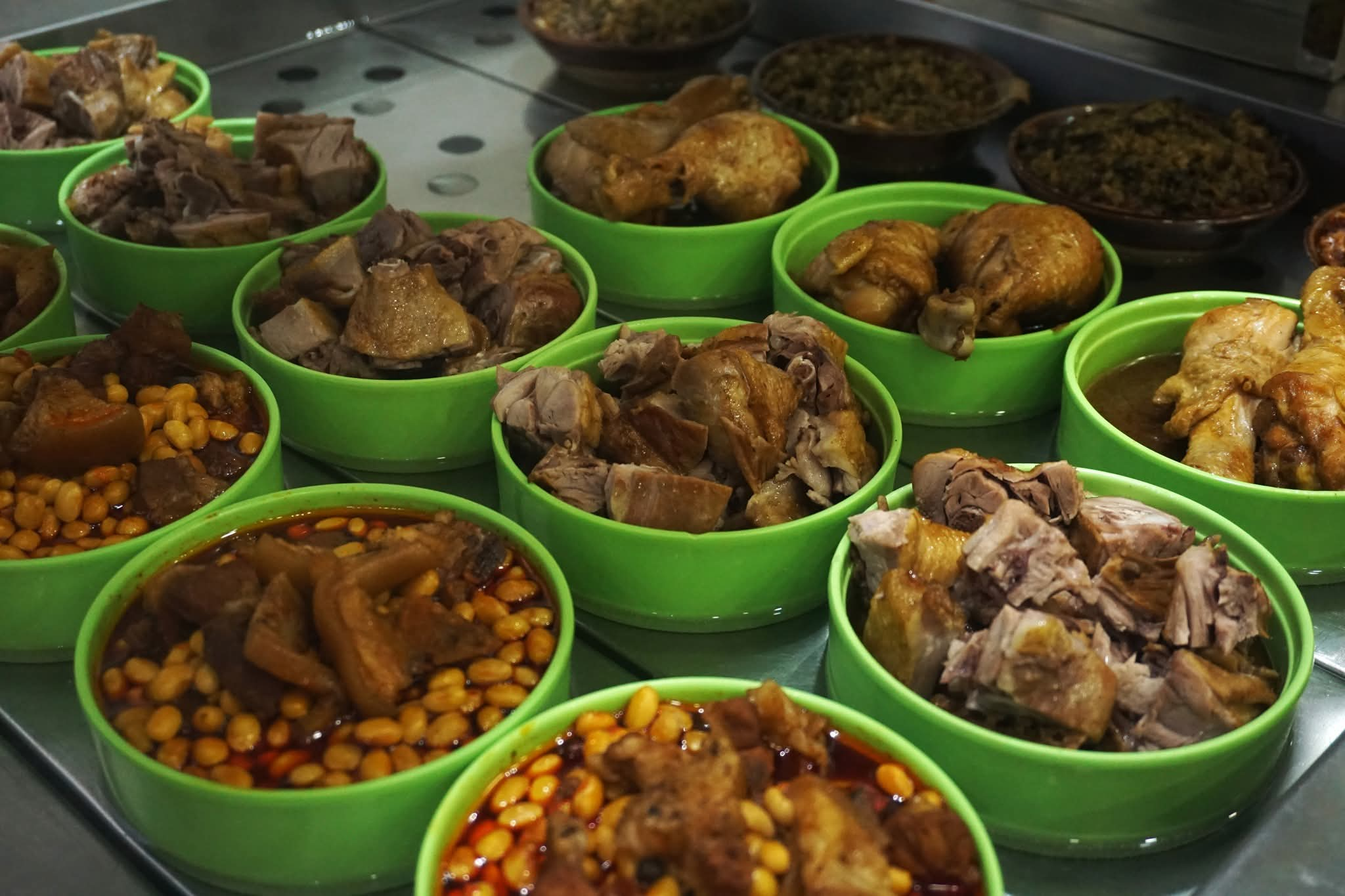
An excellent way to get to know the range of local dishes in China in some depth is to visit one of the local buffet restaurants.
How common they are does depend on the area and the street. They tend to turn up on side streets, near a market or in one of the close-knit residential neighborhoods characteristic of Chinese cities. But when you find one, it is an excellent answer to the need for a quick and quite substantial lunch.
The selection, as I say, varies from place to place, but will usually include some of the iconic dishes beloved of the locals, in that vaguely defined yet always promising style of cooking known as “home-style” (家常): a fine range of vegetables, tofu, and meat, and usually a selection of soups, porridges, and fermented foods as well.
And although I long ago converted from the Sichuan culinary faith to the Yunnanese, passing through Chengdu, the valley’s capital, is a good chance to revisit old loves through the friendly, almost kibbutz-like prism of the corner buffet restaurant.
Spicy carp, battered eggplant or eggplant in the “fish-fragrant” style, and “dry-fried” beans with chili join the obligatory gongbao chicken, fried ribs, stir-fried cabbage, and ma-la tofu. The last is enveloped in Sichuan’s distinctive aroma of abundant hot chili, reinforced by Sichuan pepper capsules (Zanthoxylum sp)—the two have been the most important aromatic ingredients in Sichuan cooking for at least the past 300 years.
All these, as mentioned, will be accompanied by cold dishes: delicately flavored tofu sheets, bean-sprout salad, bamboo shoots with garlic and chili, and the fondly remembered dish from this morning—chicken slices in chili oil and ground hua jiao, further enriched, lest we should go without, with slices of fresh green chili.
Chinese buffets, when you find them, are, as I say, a resoundingly flavorful reminder—and a bargain, at around 15–20 kuai a meal—of the inexhaustible richness of regional Chinese cuisine; of the unity and multiplicity contained in the seasonings, ingredients, and different cooking methods found throughout the Middle Kingdom; and of the fact that even in ten thousand years, you will never manage to sample everything steamed, stir-fried, fried, chopped, blanched, and served beneath the heavens.
.
Continue the conversation
A question, a correction, a source I should know about? Write to me privately — I read every note.
Send a noteField dispatches
New essays and journey announcements, a few times a year.