This week I broke a tooth in an encounter with a stubborn bean. The tooth was soon repaired, but in the meantime fried broad beans have been vetoed at home, and so another small comfort has vanished from my plate.
Still, these substantial beans are rather hard to avoid. In one form or another, they have been a cornerstone of the Chinese diet for generations.
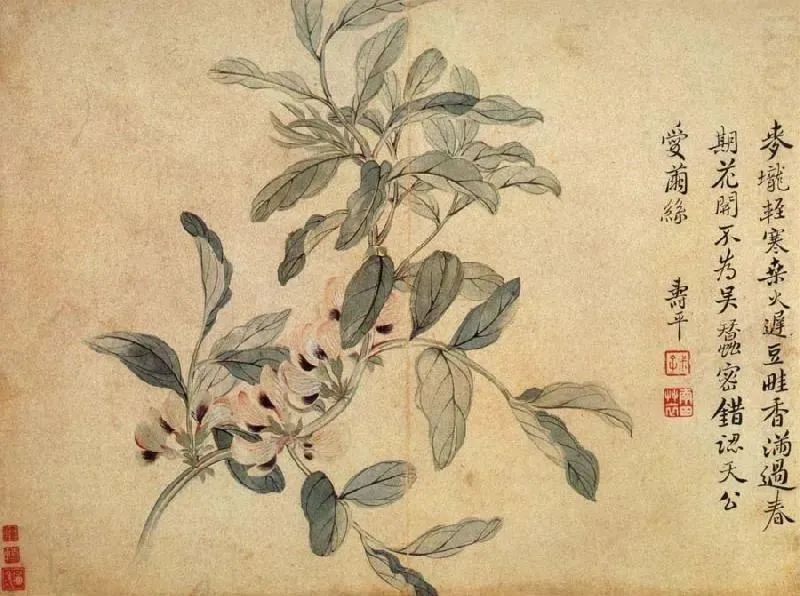
As a legume grown across many regions, the broad bean also goes by a curious assortment of names in China. These—“big bean,” “orchid-flower bean,” or the common “silkworm-pupa bean”—usually refer to its shape and its considerable size compared with other legumes found here.
Like quite a few staple crops in China, the broad bean is a long-established immigrant. Current research suggests that it was domesticated—or at least present—in the Western Galilee more than 10,000 years ago. The elusive wild ancestor of this nourishing legume was discovered in recent years at a Natufian site in Nahal Me'arot on Mount Carmel. This helps me strut through the local market in Dali, puffed up with pride, pointing imperiously at heaps of green broad beans while the stallholders remain entirely indifferent.
Its migration along those Silk Roads brought the hearty legume to the loess plains of northern China, where it acquired the ever-appropriate name hu dou 胡豆, or “barbarian bean,” and later the nobler fo dou 佛豆, “Buddha bean.” Perhaps this recalls its roundness and baldness, its enormous size, or its importance as a foundation of the vegetarian diet prescribed by an emerging Chinese Buddhism.
An appealing hypothesis derives the name “fo dou” from the Arabic ful فول—or, somewhat more plausibly, from the Aramaic then widely used in Central Asia. For now, though, that hypothesis has to be set aside.
Either way, the Middle Eastern broad bean was an enormous success in China. Its ability to yield a crop in harsh, cool conditions made it a vital dietary supplement across northern and western China. Its role in staving off hunger during the precarious spring months, before the grain ripened, helped establish it as a saviour of lives and governments alike.
Yet the broad bean reached the height of its importance in Chinese cooking not as a solid legume, but as the deeply flavourful product of enzymatic digestion. It forms the basis of one of today's most important fermented ingredients—certainly in Sichuan cooking: doubanjiang. True to the Chinese tradition of breaking legumes down into umami, this dark broad-bean paste skilfully employs mould, salt and chilli to turn the beans into a richly flavoured paste with a distinctive aromatic profile, frequently paired with wok dishes, marinades and sauces.
Here in Yunnan's mild climate, broad beans are a popular winter crop. Happily, some growers cultivate them throughout the year, so fresh green broad beans—a fleeting product in the sweltering Middle East—are regularly available here.
Despite its foreign origins, the Middle Eastern broad bean has found a warm home in China's heart. China is the world's largest producer of the legume and, presumably, also one of its largest consumers.
And fried broad beans, by the way, are worth the whole journey.
Continue the conversation
A question, a correction, a source I should know about? Write to me privately — I read every note.
Send a noteField dispatches
New essays and journey announcements, a few times a year.