Essay
By Noam Backner
From Mongolia to Pakistan: The Story of Khan
How a title of steppe sovereignty became a surname borne by millions of South Asian Muslims.
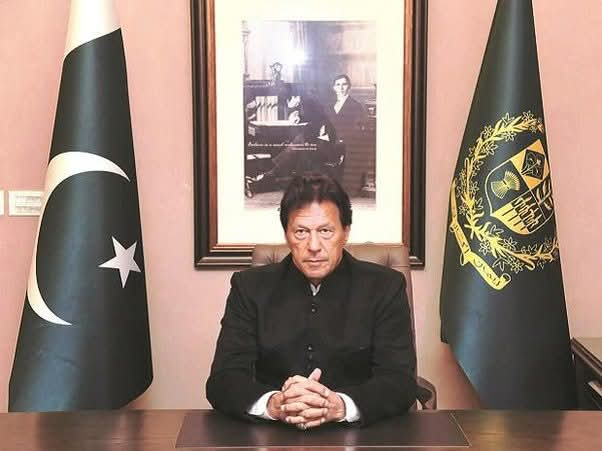
Since the subject has come up, here is a relatively brief account of how—and why—millions of South Asians, more than anyone else, bear the name and memory of a world conqueror: this page’s much-revered founding father, Genghis Khan.
As you may recall, khan, along with closely related forms such as khakan, khagan and ke-han, is perhaps the most prestigious royal title in human history, if we consider both its geographical reach and its longevity.
Its origins are lost in the mists of time, but the title appears to have emerged in the Rouran realm around the fifth century. From there it passed to the steppe states that followed, whether ‘Mongol’, Turkic or otherwise. Its early adoption beyond the politics of the steppe is already attested in Tang China—itself a ‘Chinese’ state with exceptionally strong steppe connections.
The title received its greatest boost to glory, however, from the thirteenth-century Mongol Empire. The empire sustained enough prestige to pass on both the title and, to a considerable extent, the structure of the elite that bore it to a long succession of states, from the Kazakh Khanate to the Ottoman Empire, right up to the threshold of the twentieth century.
How, then, does this coveted title now adorn the modern identity papers of millions of South Asian Muslims, most of them in Pakistan, India and Bangladesh, or in their communities abroad? After all, even the mighty Timur the Lame had to tie himself in knots over his inability to claim it. His realm ultimately became known as the state of the ‘in-laws’, thanks to his marriage to a Chinggisid princess.
The answer is probably complicated. Put simply, though, the illustrious title gradually spread and lost some of its exclusivity. It circulated as a designation of military and political rank among tribal chiefs, regimental commanders and other officials in the Mongol Empire’s successor states. Almost all belonged to a world in which tribal affiliation, Turkic identity and Islam were dominant. These soldiers, commanders and administrators eventually made their way into India’s Mughal Empire, the southern successor to the Timurid emirate, drawn by its strong Central Asian connections, its immense wealth and its many wars.
By this stage, the title ‘khan’ seems to have evoked less of an immediate association with the beloved of the blue heavens, the pagan Mongol of the house of Genghis and the distant steppe. Instead, it carried chiefly—or at least to a considerable degree—the flavor of a military identity, without necessarily implying any clear ethnic or family connection to the steppe’s royal dynasties. Many who bore the title were by then not only Turkic but also Pashtun, western Iranian or local converts to Islam from the communities of Hindustan.
Their service at the courts of the Great Mughals, and later in the ranks of the East India Company and the directly administered British Raj, gradually wore away more of the title’s specifically military associations. It became increasingly identified with the subcontinent’s Muslims, regardless of ethnicity. Some of these officeholders were of local Rajput ancestry; at least one belonged to the African-descended Siddi community.
Early modern systems of population registration, under both the British Raj and the nation-states of South Asia, together with the establishment of modern citizenship, finally fixed the title’s status as a surname in its own right. It no longer depended directly on religion, ethnicity or occupation. Today it is borne chiefly, though not exclusively, by South Asian Muslims: tens of millions of people around the world, including, apparently, at least one in every thirteen Pakistanis.
And, after all, is that not a world-conqueror’s legacy worth taking pride in?
In the photographs: S. Khan, N. F. A. Khan, S. R. Khan, A. Khan and G. Khan.
Continue the conversation
A question, a correction, a source I should know about? Write to me privately — I read every note.
Send a noteField dispatches
New essays and journey announcements, a few times a year.