Essay
By Noam Backner
The Soul of Beijing
Among multilingual stone inscriptions, enduring communities and surviving hutongs, a return to Beijing reveals a city still bound to its past.
This visit to Beijing proves once again why it has everything it takes to be crowned a “great city.” A term that, to my mind at least, has less to do with physical size than with that hidden weave of deep connections.
And nothing warms me through quite like walking past the Confucius Temple at Guozijian again—not to go in, heaven forbid, but to gaze once more at the stone tablets along the street and the inscription in five languages they bear.
That ancient order has long since ceased to reign here, and yet it remains, right here, along pathways faint but tangible enough.
Those who could read Manchu have long since vanished, absorbed into the assertive Han Chinese characters to their left. But to some extent the Manchu Empire is still here, in scale if not in substance, and a glance at the other side of the stone is enough to see it.
And the Tibetans are still here, coming down from the mountains to the heart of the realm to make a pilgrimage to Yonghe Gong and upload a selfie to some social network. Even the Karluks have returned in considerable numbers, to bake flat naan breads and stretch noodles. And the Mongols? Contrary to the well-known song, they never left, and they run a wood-paneled bar, grow paunchy and smoke too much.
And the local Hui sell sweets and beer beneath “halal” signs, while the Han—tea merchants from Fujian, tourists from Hubei and innkeepers from Shandong—are all drawn into the northern capital’s power to create, preserve and destroy.
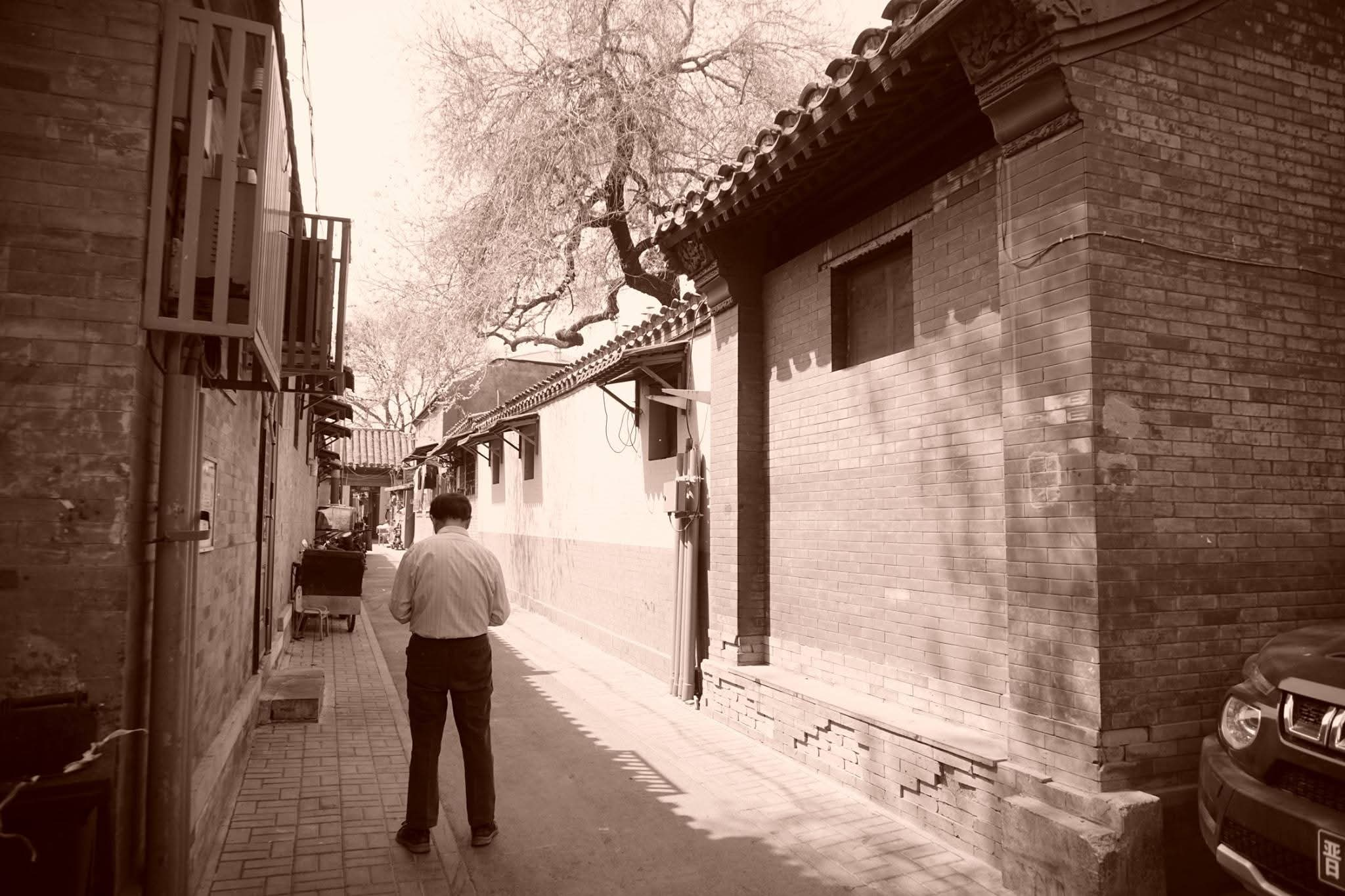
The hutongs are still here too, though few remain. The last survivors of Beijing’s lost “Four Olds,” these traditional neighborhoods were and remain the city’s true heart, even as the skin of its mighty walls collapsed into ruin, its temples mostly fell silent and its imperial heart froze into museum dust.
And to me, at least, a visitor, it seems that Beijing has reached a certain accommodation with its past, after a hundred years of tumultuous upheaval. Is that enough to satisfy those who still pray for its peace in its ascetic alleyways? The nostalgic heart is an aching heart, regardless of how the world goes. Is the swish of electric vehicles and the scent of cafés enough to send fresh blood through the arteries of ancient brick, and secure their place in a world that seems to be accelerating itself to death? The poplars have their prophecies. But summer is at the door, the humidity is already rising, and the shadowy alleys are as inviting as ever, with a faint breeze. For today, at least, the soul of Beijing is still here.
Continue the conversation
A question, a correction, a source I should know about? Write to me privately — I read every note.
Send a noteField dispatches
New essays and journey announcements, a few times a year.