One amusing phenomenon perhaps familiar to every foreigner in China is the panic that sweeps through a barbershop the moment the staff come into contact with a beard. In such cases the solution — trimming it yourself — seems to grip the proprietors with a mixture of anxiety over losing control of the clippers and enormous relief.
Many Chinese men have rather sparse beards, or only a limited ability to grow one beyond the front of the face. Sparse beard growth in East Asia stems from genetic variation that has reduced the density of hair follicles and their hormonal sensitivity. These traits limit beard growth and concentrate it around the mouth — without, incidentally, indicating low testosterone levels.
Despite this genetic tendency, facial hair played a central social and political role in Chinese history. Under Confucian influence, body hair was considered a sacred gift from one's parents, and men grew their beards throughout their lives as a mark of wisdom, masculinity and social standing. Forced shaving was at times a humiliating punishment, a missing beard a source of shame, and a number of stories, both comic and tragic, tell of the Chinese elite's obsession with beards.
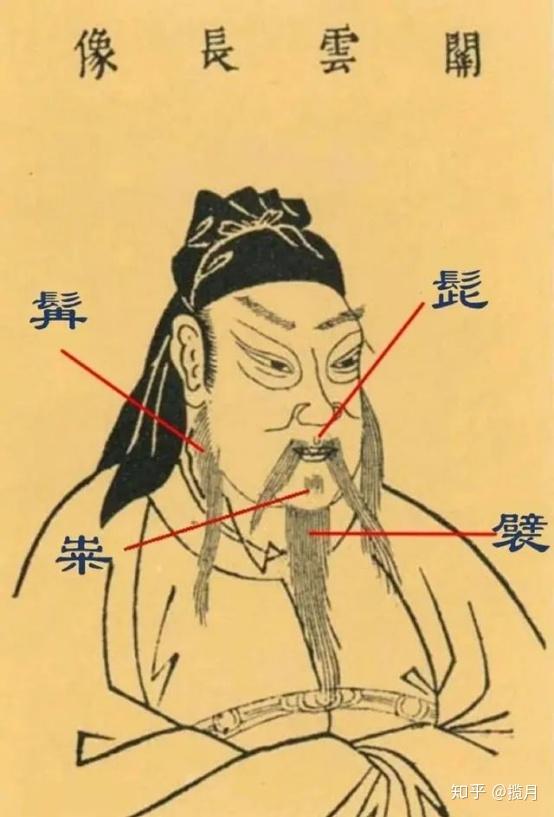
In older Chinese, each part of the facial hair had its own name. The character for the chin beard (须, *xu*) was considered so essential a mark of manhood that its meaning evolved, in the modern language, into a word for obligation or necessity. The modern general term for a beard (*huzi*) derives originally from *hu* (胡/鬍), an ancient Chinese name for the northern peoples and the Inner Asian "barbarians" generally, who often prided themselves on thick, abundant facial hair — certainly compared with the Han population — although over time the term lost its ethnic association and became a generic word for facial hair.
A major turning point in beard culture came in the seventeenth century with the conquests of the Manchu Qing dynasty and the foreign hair customs it imposed. In the twentieth century, with the fall of the empire and the rise of Western influence, a clean-shaven face became the dominant ideal of beauty, associated with progress, hygiene and ambitious seriousness.
Today one can still spot the occasional man with an impressive beard here and there, but these men, it seems — when they are not beggars — wear them for reasons of artistic or social freedom (somewhat as in the West), or out of attachment to the traditions of ancient China, including a tendency, at least here in Dali, to dig rather too deeply into questions of taste, interpretation or genuine understanding — all, as I said, in keeping with the tradition of cultural refugees.
As a Westerner in Yunnan, I am probably seen as a cross between a beggar and a vagabond, so no one takes any real interest in the tuft of hair on my face — that is, so long as I keep my hands off the razor and, better still, keep my feet out of the barbershop.
Have a smooth day.
Continue the conversation
A question, a correction, a source I should know about? Write to me privately — I read every note.
Send a noteField dispatches
New essays and journey announcements, a few times a year.