Essay
By Noam Backner
Foreign Spices
A search for two elusive spices in Bangkok’s Chinatown opens onto questions of migration, memory, and belonging.
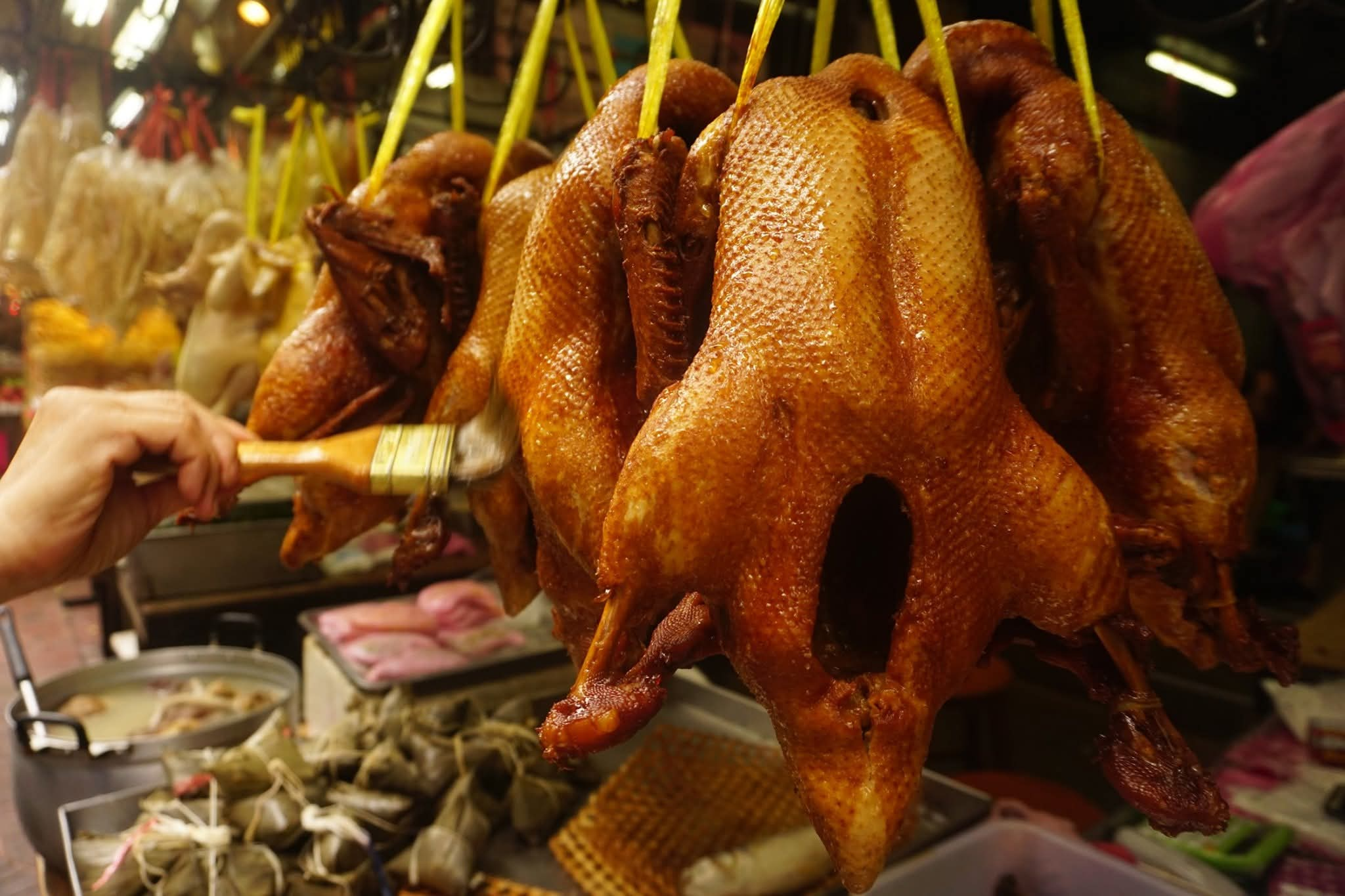
Wandering through Bangkok’s Chinatown never disappoints. And since I have no real experience of Chinese population centers outside Asia broadly defined, this neighborhood—alongside, perhaps, its counterpart in Rangoon—serves as a test case and a mirror for much of what occupies me within China itself.
Beyond its profusion of smells and flavors, the quarter also exudes a certain conservatism, perhaps a common trait among immigrants: the furnishings and outdoor signage, in gold and faded red, look as though they were bought at the closing-down sale of some forgotten Mandarin restaurant.
It was also clear that the China reflected in these alleys is very different from the one I know, separated from it in time, space, and texture. Most Chinese Thais, certainly in central Thailand, trace their origins to the southern maritime provinces, something reflected in their original language, their occupations, and the design of their vividly colored restaurants and temples.
And yet, even after generations of migration and cultural and linguistic assimilation, it is clear that here in Yaowarat, at least, the air is steeped in China—even if it is a slow, cautious, slightly faded China, and certainly one with time on its hands, especially beside China proper, which seems to be cramming itself headlong into the face of eternity.
Beyond a satisfying ramble through the foreign-yet-familiar market and the shark-fin and swallow’s-nest restaurants, I also meant to visit the local Nguan Soon shop, a household brand across Thailand, founded by the white-pepper merchant Artchit Limprana, also known as Lim Jin Pua. Like so many of his fellow members of Thailand’s industrial elite, he came from the industrious coastal cities of southeastern China.
In the small, pleasant shop, I stocked up on those grains of paradise (Aframomum melegueta) and cubeb pepper: the first an African species of ginger, the second a forgotten pepper with a lemony, musky scent, and both, as you may recall, distant cousins in pepper’s historical family. I had been looking for these two spices for a long time, and perhaps nowhere could have been more fitting a place to find them on that steaming offshoot of the maritime trade route stretching from the southern islands to the shores of Africa and beyond.
And still, passing through streets redolent of someone else’s childhood, with their faded gold Chinese lettering, shops crammed with old-fashioned canned goods, and dried bamboo shoots, one can ponder migration and identity, forgetting and memory, and the stranger’s standing as a source of fertility—or a threat—to the womb of the receiving country.
For the distance between the exotic and the invasive can sometimes be a veritable abyss. Just as Chinese Thais, even if only after generations of painful integration, now largely form the country’s backbone, elsewhere they have sometimes been condemned to institutional discrimination, or to being hunted down in the streets themselves.
Perhaps these are the pains of integration everywhere: the passage, certainly in its modern form, from Lim to Limprana, from “Ben Avraham” to Goldberg, and to Shai from Alex, marks the nation’s state of matter. A society seeking stability—and perhaps even in a premodern context, though there are counterexamples—gropes toward homogeneity as a prerequisite, if only through minimum requirements of values and language.
And in a global age when border-crossing goods move in unprecedented volumes and at unprecedented speed, but migration remains hard, the stranger remains, perhaps as ever, an exotic spice with which to adorn oneself—provided it does not spoil the broth. .
Continue the conversation
A question, a correction, a source I should know about? Write to me privately — I read every note.
Send a noteField dispatches
New essays and journey announcements, a few times a year.