Essay
By Noam Backner
In Praise of the Squat
Squat toilet versus sitting toilet: an old Chinese conflict over body, health, economy and modernity.
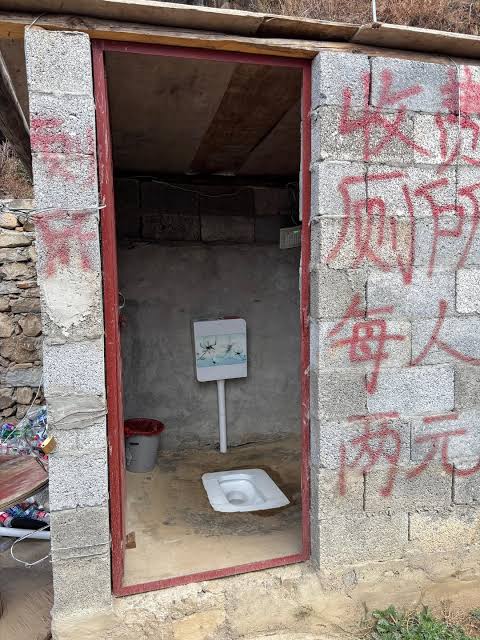
Without going into detail, there are two bathrooms in our house, and relations between them, even today, are not always tranquil.
The contest between the squat toilet and the sitting toilet in China is by now an old conflict, one that revolved, then as now, around body and health, alongside the gaps between village and city, old and new, and even north and south.
In the eyes of early Chinese observers, that regal sitting upon an ornate porcelain bowl was seen as a lazy contrivance that complicated a simple practice, numbed atrophying limbs, and even obstructed the natural flow of qi. Beyond the colorful Chinese descriptions, this view is presumably anchored in the needs of human anatomy and evolution, since squatting—natural to humans—clearly relaxes the muscle at the gate and creates a natural anatomical path for the products of digestion.
Beyond questions of nature and posture, the tension between methods of relief was also rooted deeply in an economy of resources. Historical China treated human excrement as an agricultural asset: in a certain contrast to the modern direction of the flow of goods, Chinese cities supplied their farming hinterland with that precious "night soil," while in the village, as we may recall, a full circle was completed in the form of the pigsty latrine. The arrival of Western flush toilets in the cities of the eastern seaboard was therefore at first dismissed as economic folly—a mechanism for destroying vital fertilizer, to the delight of the fish in the sea.
When Western sitting toilets finally spread during China's urbanization drive in the twentieth century, they raised an enduring problem of public hygiene, along with certain class tensions, as the Chinese public perceived—and to some extent still perceives—a shared toilet seat as a dreadful breeding ground for contamination. As a discourse accompanying public hygiene and modernity, none of this is new: a memo from the health bureau of Republican Shanghai once complained that citizens not yet initiated into the matter were climbing onto the rims of toilets with their shoes on—a provincial habit that soiled the bowls with mud and thereby thwarted the realization of hygienic modernization.
On a note of values, one writer of the period added his mockery of those who believed that "if they suddenly sat on a lavatory seat instead of squatting over a ditch, they would at once become modern, enlightened citizens."
The question of the squat will presumably continue to accompany the boundaries between Chinese modernity and its periphery, and perhaps no foreigner's anxiety in the Middle Kingdom matches the one that comes with being forced to squat before the sacred throne.
These squat toilets—if only because of water management, maintenance, notions of health and body, and ingrained habits—are still expected to go on serving the needs of the Chinese nation, and of the expatriates in its midst, from the rising of the sun to its setting.
Continue the conversation
A question, a correction, a source I should know about? Write to me privately — I read every note.
Send a noteField dispatches
New essays and journey announcements, a few times a year.