Research
By Noam Backner
Exiles, Part II
Wander through the markets of Tashkent, Dushanbe, Khujand, or Bishkek, and you will inevitably stumble upon vibrant piles of “Korean pickles”: tiny marinated shiitakes, white-vinegar carrot salads, and, most strikingly, glowing mounds of red kimchi.
Wander through the markets of Tashkent, Dushanbe, Khujand, or Bishkek, and you will inevitably stumble upon vibrant piles of “Korean pickles” in a kaleidoscope of hues: tiny marinated shiitake mushrooms, carrot salads steeped in white vinegar, and, most strikingly, glowing mounds of red kimchi.
Kimchi—napa cabbage fermented with ginger, garlic, seafood paste, and a formidable dose of red chili—is the bedrock of Korean cuisine. In its modern form, it has been a staple of the Korean table since at least the 18th century.
Students of culinary history might wonder how these Far Eastern preserves found their way to the dusty markets of Central Asia. If they look closely at the faces of the stall owners, they might be struck by a certain foreignness etched into their features, a distant echo of another place.
Some might even add that the kimchi in Central Asian markets tastes just a little too salty.
Koreans began migrating to the Russian Far East, just across the border from their homeland, as early as the turn of the 19th century. By the 1850s, they numbered five thousand. By the outbreak of the Great War, some 65,000 Koreans lived within the Tsarist Empire, their numbers driven upward by famine and, later, the Japanese occupation of their home peninsula.
Following the birth of the Soviet Union, Korean immigration was strictly curtailed. At the same time, the existing population was integrated into the Soviet “mosaic of nations,” complete with its own Korean-language newspapers, schools, teacher training colleges, and even theaters.
Japan’s occupation of Manchuria in the early 1930s trapped these Koreans in a geopolitical vice. The Japanese feared Korean-Soviet cooperation would undermine their control in Manchuria and Korea; the Soviets, meanwhile, viewed the Koreans as potential fifth-columnists for Japanese aggression.
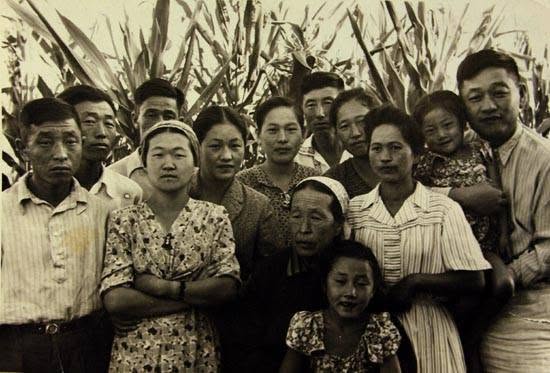
In late 1937, at the height of Stalin’s Great Purge, the entire Korean population—then roughly a quarter of the Russian Far East’s inhabitants, or some 180,000 people—was herded onto cramped trains. They were shipped thousands of miles west to the heart of the continent, primarily to the Soviet republics of Kazakhstan and Uzbekistan.
The hardship did not end with the journey. The authorities’ near-total indifference to the deportees, coupled with a dire lack of food and medicine, claimed the lives of roughly one-fifth of the exiles within two years. It is likely that only the humanitarian aid of their new neighbors, the Kazakhs and Uzbeks, saved many more from succumbing to disease and starvation.
The status of the Koreans began to improve in the mid-20th century. In 1989, the Supreme Soviet finally recognized the suffering inflicted upon them. By 1993, the Russian Parliament had cleared their names, granting them citizenship and the right to return to the Russian soil—including the Far East—from which their ancestors had been expelled.
Despite this recognition and the right of return, most Koreans in the former Soviet Union—who call themselves Koryo-saram—chose to stay in Central Asia. Only a few relocated to the cities of Russia or Ukraine. Today, approximately 200,000 Koreans live in Uzbekistan, 100,000 in Kazakhstan, and 17,000 in Kyrgyzstan, with smaller communities in Tajikistan, mainly in Dushanbe and Khujand. A small number have moved to South Korea under special government programs.
Even now, in the independent republics of Central Asia, the Koryo-saram face an uncertain economic future and the challenge of navigating shifting languages and identities in a post-Soviet world.
The deportation of the Koreans, like that of other groups who suffered under Stalin’s reign of terror, can seem like distant, graying history—a faded footnote in the complex human geography of the USSR. But like all such tragedies, it leaves behind painful consequences that still prick at the daily lives of tens of thousands.
The tears shed by those deportees on their way to the heart of Asia still linger in the collective memory of the Koryo-saram, in the fractured identity of their descendants, and in the kimchi that remains—just a little too salty.
Related writing
Essay
Between Mysticism and Revolution: The Poetry of Khomeini
On Persian verse, mystical insight, and the fine line between spiritual transcendence and political authority.
Field Note
The Ginger Garden
On gardening, rhizomes, and a small botanical obsession in a Dali courtyard.
Essay
Rivers and Lakes
“When the springs dry up, the fish huddle together, gasping to keep one another moist; it would be better if they could forget each other in the rivers and lakes.” (Zhuangzi)