Essay
By Noam Backner
Sufi Roads: From Central Asia to Jerusalem
Pilgrims, hospices and the age of steam along the Sufi routes linking Central Asia with the Holy City.
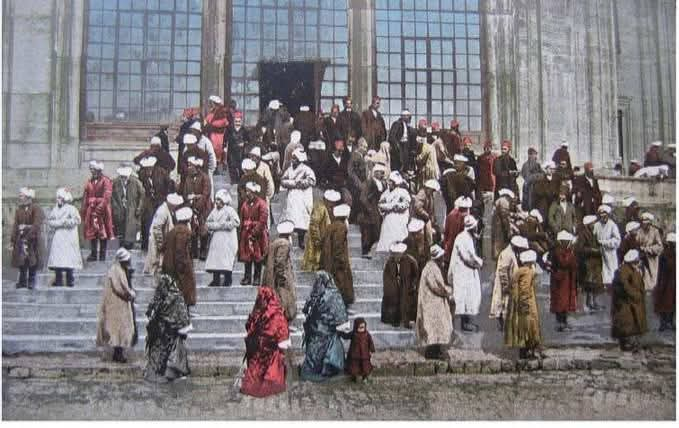
As Islam’s third-holiest city, Jerusalem has drawn scholars, visionaries and pilgrims for generations, despite lying on the political margins of a Middle Eastern world whose centers of gravity were usually Cairo, Damascus and, later, Istanbul.
In Sufi tradition, it became customary to pass through Jerusalem on the way to the major holy sites of the Hejaz. Many adherents of the Sufi orders of India and Central Asia visited the city and stayed for varying lengths of time. Jerusalem’s enduring image as a pious, impoverished city suited some of the most widespread Sufi ideals rather well.
From the late nineteenth century, the flow of pilgrims to Mecca increased considerably, encouraged by modern transport and the relative ease of travel it offered. Fast shipping services from the port of Bombay gave Muslims from India, China and Southeast Asia a far more practical and convenient way to fulfill the obligation of the Hajj. In the process, pilgrimage to Mecca became, for the first time, a truly global phenomenon.
The developing sea routes were joined by networks of iron and steam spreading across Asia, which in turn allowed the inhabitants of Russian Turkestan to participate in the Hajj in its modern form.
Many Central Asians setting out on the Hajj also took the southern route through the ports of the Indian subcontinent. The transport networks of Tsarist Russia, however, offered a longer journey rich in both spiritual and commercial opportunities: along the Turkmen coast of the Caspian, through Baku and Istanbul, and often, as noted, through al-Quds—Jerusalem—itself.
The 1920s and 1930s saw some growth in the Sufi presence in the Holy City. This was partly a consequence of Wahhabi pressure in the Hejaz and the young Turkish Republic’s campaign against the Sufi orders and their heritage. Jerusalem remained almost the only major destination in the Middle East where Sufi networks enjoyed relative freedom of activity and worship. Pilgrimages to the tombs of saints were particularly popular, including the Tomb of David, the Cave of the Patriarchs and the tomb of the celebrated eighth-century poet Rabia al-Adawiyya.
Travel accounts of the period abound in descriptions of dervishes: dust-covered men from distant lands trudging toward Jerusalem, begging bowls in hand, leopard and tiger skins over their shoulders, their throats full of praise for the Creator of the worlds and for those who filled their bowls alike.
‘…Their hair unkempt, their tangled beards spilling over chest and back… felt caps and the skins of deer and leopards upon their shoulders, and enormous wooden beads hanging from neck to waist… dervishes wandering here and there, with flutes and drums, collecting alms…’
Over time, several Sufi hospices arose in Jerusalem to serve pilgrims from Central and South Asia. The best known today—the Afghan, Uzbek and Indian hospices—still stand within the city walls. Particularly important was the Uzbek hospice of the Naqshbandi order, the Zawiya al-Uzbekiyya. Apparently established in the seventeenth century, it served many pilgrims from western and eastern Turkestan. Its registers record arrivals from the historic cities of Central Asia, including Kashgar, Khotan, Kokand, Samarkand, Khujand, Bukhara and Khiva. These hospices offered weary pilgrims not only a bed and simple meals, but also a place to meet fellow devotees—brothers on the path from other lands—helping sustain the social, theological and ritual fabric of the various Sufi networks.
The brief but fruitful period around the turn of the twentieth century opened a distinctive window of opportunity. Modern transport and relatively open borders together pumped fresh, fast-moving, steam-driven blood into the ancient pilgrimage to the holy cities of the Middle East, particularly among those connected with the Sufi movement. Yet the horrors of the twentieth century, together with the establishment of the Soviet Union, brought an end not only to pilgrimage in its older form. They also cut short many of the new, mechanized forms of pilgrimage from Turkestan to Jerusalem, leaving some Tatar, Uzbek, Tajik and other wayfarers stranded as refugees in the Holy Land—genuine exiles from home.
The establishment of the State of Israel and the new political arrangements that followed created further challenges for pilgrims. Nevertheless, several worldwide Sufi orders, including the Shadhiliyya, Qadiriyya, Rahmaniyya and Naqshbandiyya, remain active in the cities of Israel and the West Bank. Many of their members maintain complex relationships with political Islamist movements, alongside the understandable questions—especially today—of identity and place.
Jerusalem itself, may her glory be exalted, remains a destination for pilgrims from various orders. Their journeys now pass, with a distinctly unromantic inevitability, through the modern immigration authorities of the State of Israel rather than along the crumbling, dusty tracks of the late Ottoman Empire. Yet they show, time and again, that whether on camelback or barefoot, by the grace of steam or aboard the marvel of an airplane, the yearning expressed in prayer—to dwell within Jerusalem, ‘as You have promised’, and to build her as an everlasting dwelling—endures in one form or another. For many of us, it will probably endure forever.
Continue the conversation
A question, a correction, a source I should know about? Write to me privately — I read every note.
Send a noteField dispatches
New essays and journey announcements, a few times a year.