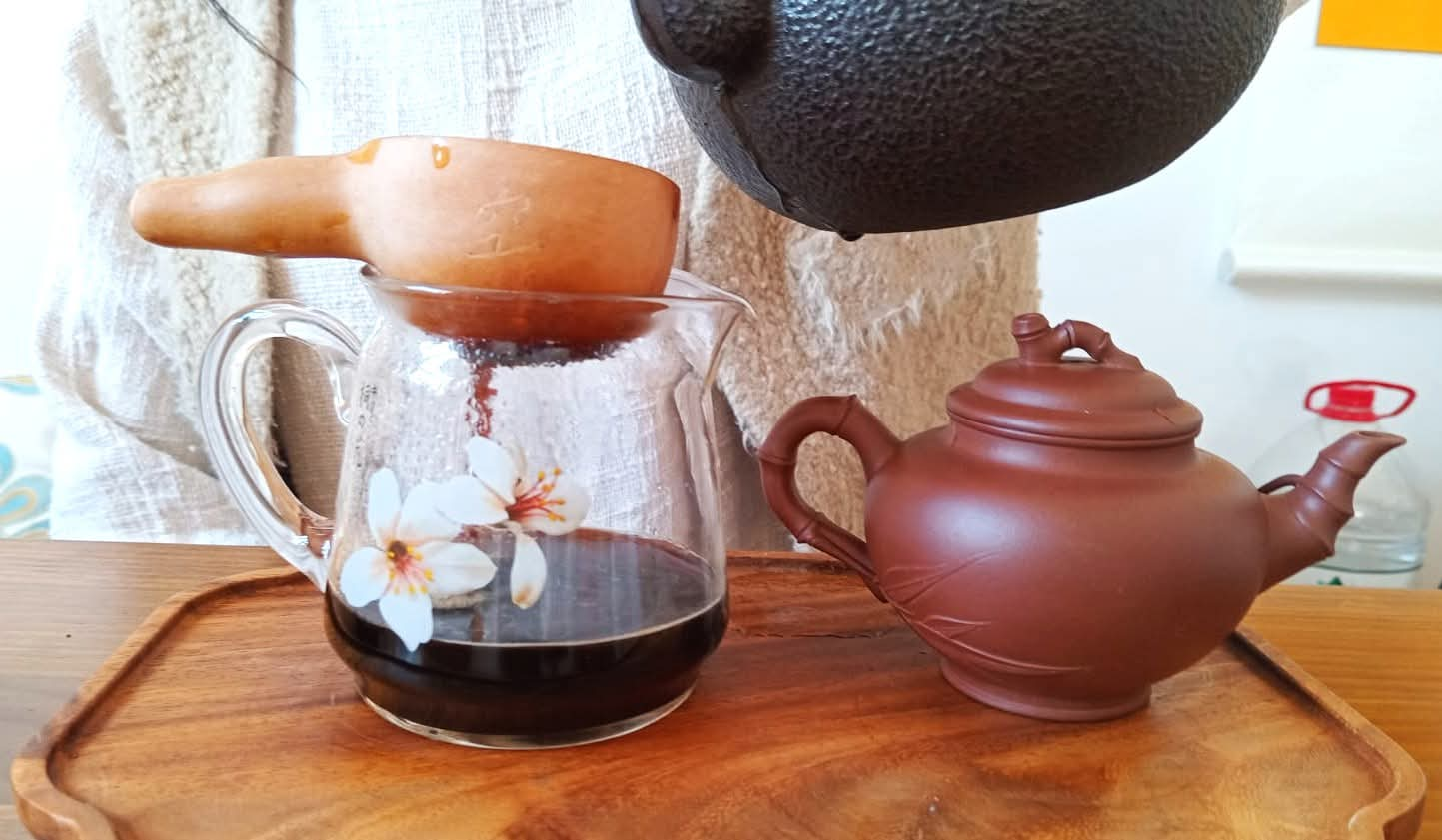
As if the seam between the ecological and the cultural were not enough, I recently had the chance to enjoy the phenomenon from its back end, so to speak, and to sip an entomological tea of the finest kind.
Insect-dropping tea (or "dragon-pearl tea," if poetic cover is required) is a medicinal drink based on the digestive products of insects as they feed on the leaves of various plants. The method originates in the southern provinces, and its principle is fairly simple: certain insect species — moths of the families Pyralis and Spodoptera, for example, among others — are fed plant matter that varies according to regional recipes, and their tiny droppings are carefully collected. These sometimes undergo further processing, including drying and lengthy ageing.
Insect-dropping tea is described in detail in Chinese texts from at least the sixteenth century, where it is mentioned as balancing heat and damp — both familiar features of life in the deep Chinese south — and, as usual, as an aid to digestion. That said, the reference in the writings of the famous physician Li Shizhen may concern not true insect-dropping tea but rather "insect-bitten tea," in which the tea's biochemistry and flavor profile are shaped by the plant's reaction to insect damage — from cicadas, for instance — and later versions of which are known today from southeastern China. Several sources also report that this excretion tea formed part of a particular classification, as one of the "four strange infusions," so it may be that the custom, which was apparently not entirely "Chinese" in origin, puzzled at least some of the classical authorities on Chinese geography.
And while the aversion to consuming any digestive product, even of tiny insects, is understandable, modern chemical analysis of these charming little pellets appears to confirm that they are rich not only in trace elements such as zinc, calcium and magnesium, but also in organic compounds such as amino acids, and even flavonoids and other polyphenols, known as antioxidants with medicinal potential.
Back at the tea table, our generous hostess pulled out a decidedly unimpressive plastic bag and remarked nonchalantly that the by-products inside were worth 700 yuan a gram (about 350 shekels), and that the contents had been aged for some thirty years or more. A little skeptical, but no longer surprised by anything produced before me in China, I watched with interest as the lady of the table steeped the luxury insect droppings into a brew as black as the devil's backside and poured each of us a first cup.
Examining the drink and sniffing it with due solemnity, as the ritual demands, I found the infusion far more aromatic than I had expected, with a pale, almost oily-looking haze clouding its surface. With a sharp sip, my mouth filled with a somewhat familiar aroma: the brew was faintly reminiscent of "cooked" pu'er, and perhaps the leaves the droppings came from really did belong to a local Chinese camellia. Still, the infusion certainly had foreign qualities and, as I said, was quite aromatic, evoking something like the cool breath that lingers in the mouth after drinking geranium tea, or something of the sort.
After a few cups I decided that curiosity and health are two separate matters, and that I had had enough dropping tea for one occasion — so I drank just nine more cups out of respect for the event, before we moved to the kitchen to recover with some jiaozi. The Chinese, of course, have a long history of harnessing everything that lives, grows or simply exists to the needs of human culture, including various insects that have served, and still serve, industry and companionship, food and medicine — the best known of them being, of course, the silkworm, one of the pillars of ancient Chinese culture and economy.
And if all this really seems a little strange, perhaps we can settle for a more sensible drink. Tea with honey, anyone?
Shabbat shalom.
Continue the conversation
A question, a correction, a source I should know about? Write to me privately — I read every note.
Send a noteField dispatches
New essays and journey announcements, a few times a year.