Field Note
By Noam Backner
The Ginger Garden
On gardening, rhizomes, and a small botanical obsession in a Dali courtyard.
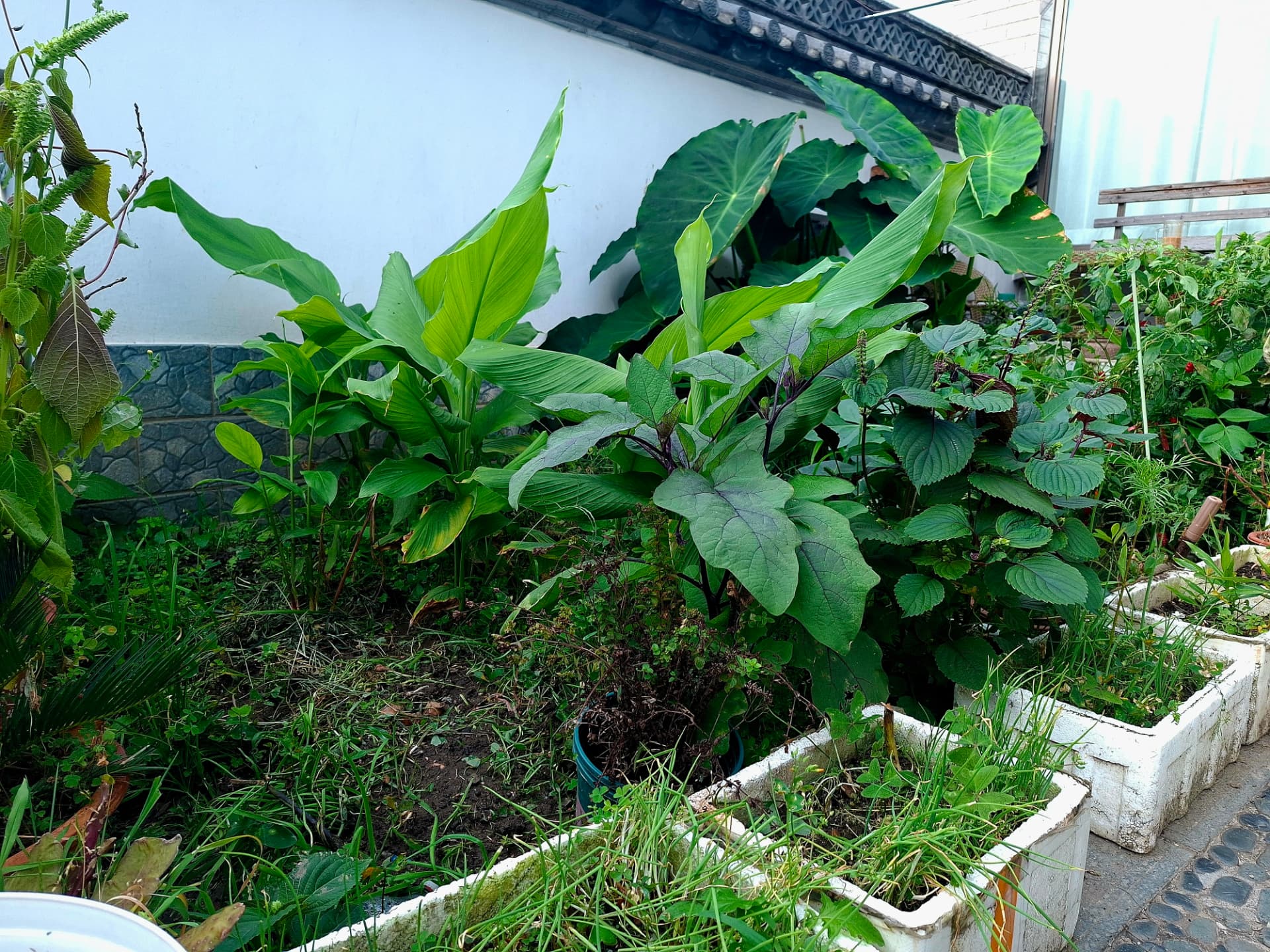
There is no activity more beneficial to the soul than gardening. While technically it is nothing more than the arrangement of living and inanimate objects in space, it is a pursuit that manages to pack the full spectrum of human emotion into a single plot.
When the auntie from the first floor left for Chengdu for an indefinite stay, her small courtyard temporarily changed hands. The vegetable patch—already in the midst of its autumnal decline—was left wide open to the experiments of an amateur.
Joining the taro, the chilies, and the pioneering turmeric (which the auntie had previously looted from my own pots) came a dormant obsession just waiting for its moment: the Zingiberales.
As the name suggests, the most famous member of this botanical order is common ginger. Yet the family includes not only aromatic rhizomes like cardamom and turmeric, but also, surprisingly, the Cannaceae and Musaceae—the bananas. Yunnan sits on the broad margins of the primary distribution for Asian Zingiberales, a group comprising thousands of species stretching from the Himalayan frontier to the edges of the Indonesian archipelago and beyond.
Many Zingiberales contain a wide range of compounds, including phenols and terpenes, which grant them their potency in regional cooking and medicine. Many are used locally by mountain communities and still await thorough research into their chemical properties.
The charm of these plants feels self-evident. For me, every visit to a new market is largely a hunt for different ginger species. I have also spotted several mysterious gingers growing at the edges of the fields here that I have yet to identify. The task is only made harder by the local tendency to call any creeping root by the general name jiang, regardless of its scientific classification.
On the other hand, the joys of e-commerce allow one to give this dormant obsession free rein. A winning combination of variety and low prices meant new rhizomes were landing on my doorstep in record time.
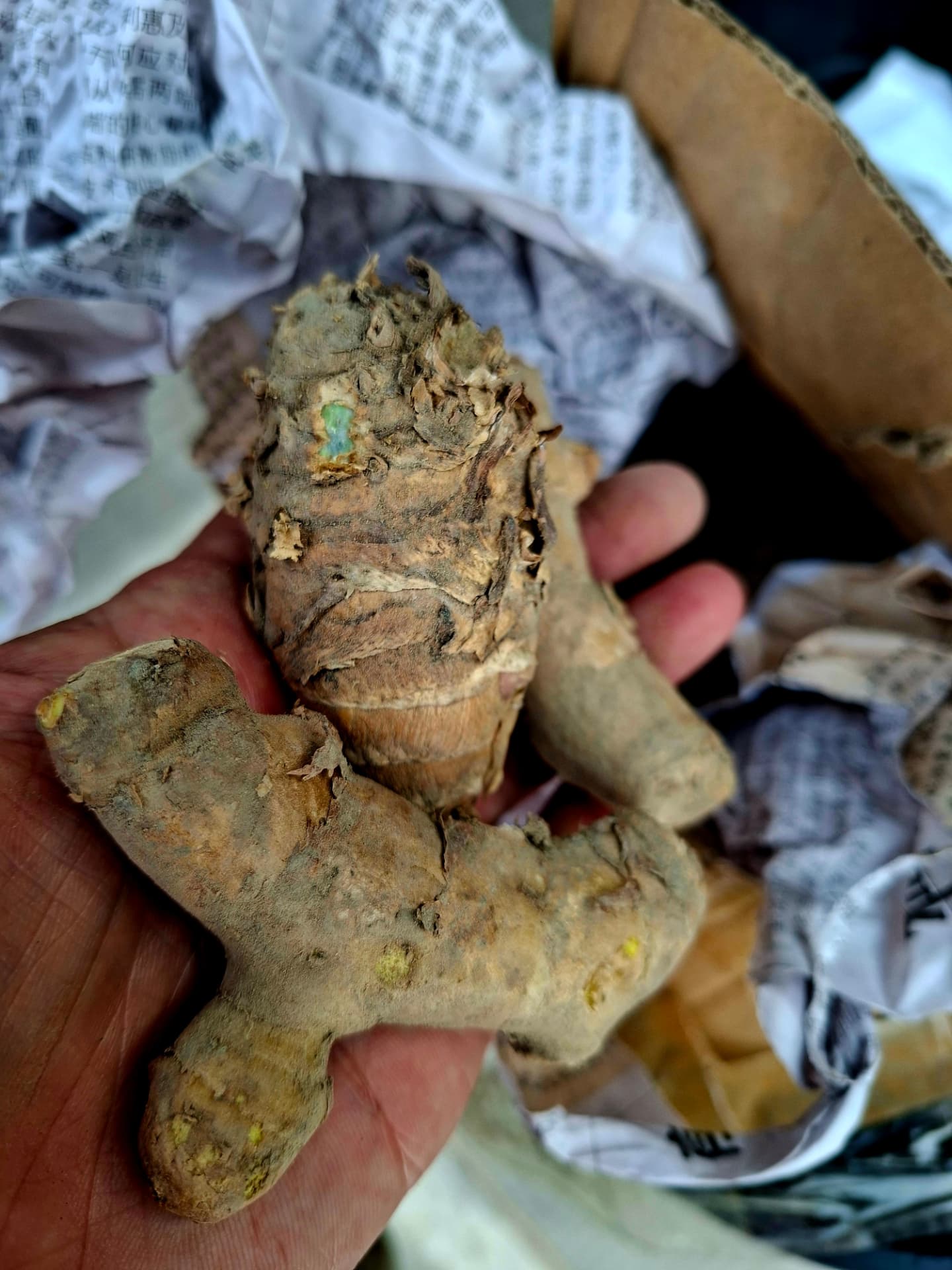
Thus, the flourishing turmeric was joined by Greater Galangal, Shampoo Ginger, an unidentified sprout from the fields, and the crown jewel: Black Ginger, a plant from the hills of Northern Thailand known for its dark, ink-colored rhizomes.
Later, they might be joined by Midnight Ginger, if I can find one, Myoga ginger, and various types of cardamom. But for most of these southern species, their suitability for the cool Dali plateau has yet to be proven.
Beyond their aesthetic, medicinal, and culinary value, these gingers have another advantage essential for the semi-nomadic: they migrate easily. If we uproot this year to move further up the mountain or along the valley, at least a few of these useful plants will accompany us. Such is the way of the world.
Related writing
Essay
Between Mysticism and Revolution: The Poetry of Khomeini
On Persian verse, mystical insight, and the fine line between spiritual transcendence and political authority.
Essay
Rivers and Lakes
“When the springs dry up, the fish huddle together, gasping to keep one another moist; it would be better if they could forget each other in the rivers and lakes.” (Zhuangzi)
Essay
The Humid South: Miasma, Body, and Space in Southern China
On the perception of the Chinese South as an ecological and metaphysical frontier—and how a landscape of danger became the empire’s economic and intellectual engine.