Essay
A Very Short History of Eccentricity in China
On refusal, cultivated wildness and the enduring place of the eccentric in Chinese culture.
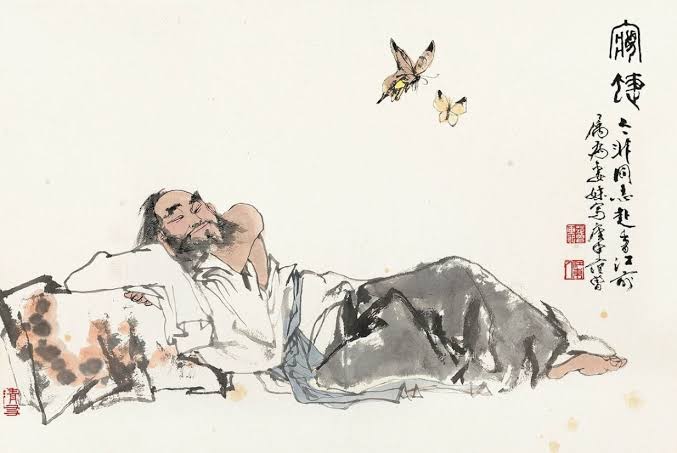
A conversation with a friend yesterday about friendship in contemporary China—during which he argued that true friendship no longer exists in Chinese society, an emotional claim we later qualified considerably—led us, by way of a digression, to the place of eccentricity in Chinese culture.
By eccentricity, I do not simply mean an interest in unusual things, of which there is no shortage, but eccentricity in the fuller sense: a deliberate departure from convention.
China has, of course, a long intellectual and practical engagement with eccentricity. To my mind, it has served as an essential source of oxygen in a society where cohesion—and social and political rigidity—has remained a durable ideal for two thousand years.
Chinese eccentrics therefore punctuate the country’s history from its beginnings. Again and again, they rap their gnarled sticks against the walls of political convention, challenging it with varying degrees of commitment and responsibility, and enriching the culture with the colours of intellectual dissent—as far as circumstances allow. The eccentric is known above all for refusing to serve, a refusal aimed at one of the central moral and practical aspirations of the Chinese social compact. The classic example is the author of the Zhuangzi, who effectively tells the king’s officials to go to hell and let him continue dragging his tail through the mud.
Others followed honourably in his wake. Beloved and respected figures such as Yan Guang and, of course, the Seven Sages of the Bamboo Grove—drinkers, public nudists and scorners of authority among them—all embody the same stubborn yet recognised Chinese position: resistance to the centre as a mode of action, one that is ‘religious’ in essence. It proceeds from a clear reading of the Way and its demands, even as the Way remains forgiving towards those who appear to transgress it.
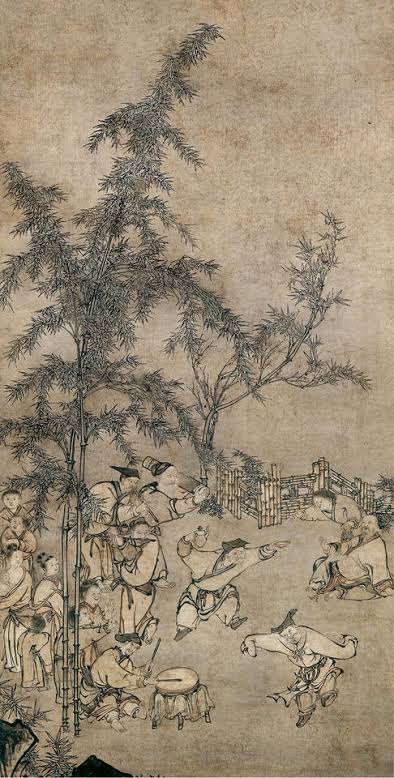
This deep-rooted attitude entered the heart of East Asian Buddhism. Chan practitioners—the forebears of Japanese Zen—gave Buddhist form to Daoist sensibilities, granting eccentric behaviour a prominent, at times exalted, place as an expression of insight into reality as it is, and of the ability to act from that insight with abandon, skill and intuition. Examples of Zen eccentricity abound; indeed, something of the sort is expected of the archetypal Zen monk, including in the later Japanese tradition. Ji Gong the Mad, Wuzhu, Hanshan and others all stand as vivid expressions of the wandering star within the Chinese cognitive galaxy.
The attitude became so familiar, even expected—if sometimes reduced to a contrived aesthetic performance—that it entered literature, art and poetry. One need only mention artists such as Su Shi, Mi Fu and Bada Shanren.
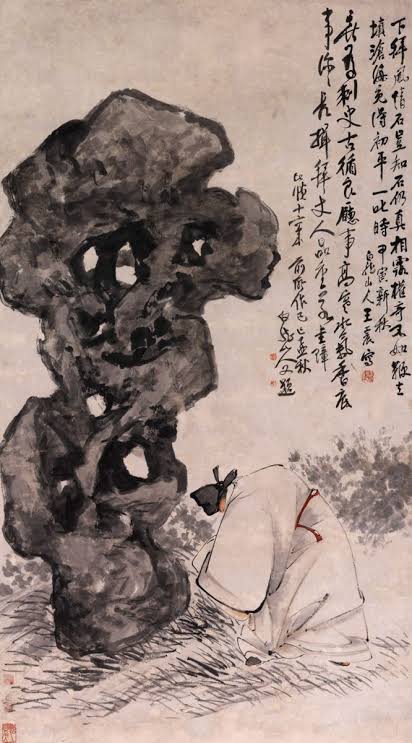
Each of these figures deserves a fuller discussion. My point here is simply that eccentricity is a deeply rooted social and moral position in Chinese culture. One qualification is important: Chinese draws a semantic and conceptual distinction between madness as mental illness, 疯, and the wild, unrestrained disposition denoted by 狂—always, of course, within the limits of what is possible.
As a born eccentric—ask my mother—I understand the attraction and freedom of this position rather well. I value its capacity for expression in the place where I now live, as well as the subtle, practised nuances from which it draws its strength and towards which it directs its considerable resources.
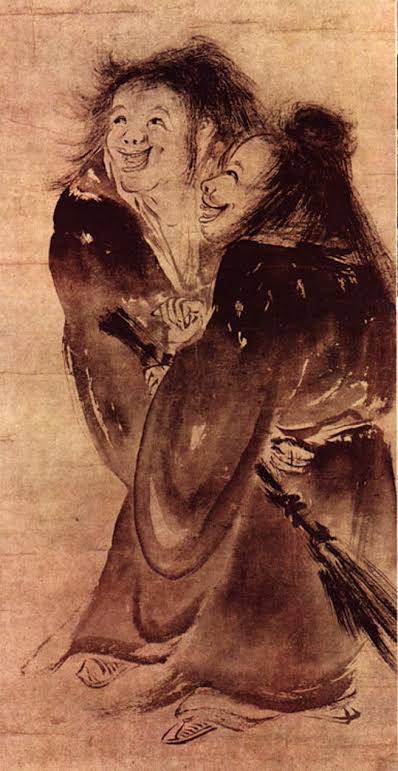
To return to contemporary China, and to answer those who mourn a vanished spirit: I remain somewhat stubbornly convinced that marrow cannot evaporate from the skeleton. Eccentricity still plays a visible role in Chinese society. As in earlier times, it may be a poetic and somewhat elitist stance, but it retains a hidden yet unmistakable place for those who choose it, commit themselves to it and are prepared to pay its required social price—within the blessed limits of the possible.
Good day.
Related writing
Essay
Jewish Traders on the Silk Roads
An eighth-century Judeo-Persian letter from Khotan offers a rare view of Jewish trade and daily life amid war in the heart of Asia.
Essay
Which Sky Would I Choose?
‘My heart was asked: Which heaven would you choose? It replied: The wise do not speak.’ — Omar Khayyam
Essay
Demons, Saints and Black Pens
Muhammad Siyah Qalam and the Eurasian world the Mongols left behind.