Essay
By Noam Backner
Guanyin of the Dali Valley
From the dawn cries of the slaughterhouse to the figure of Acuoye Guanyin: the protector of kingdoms and the soul of the valley.
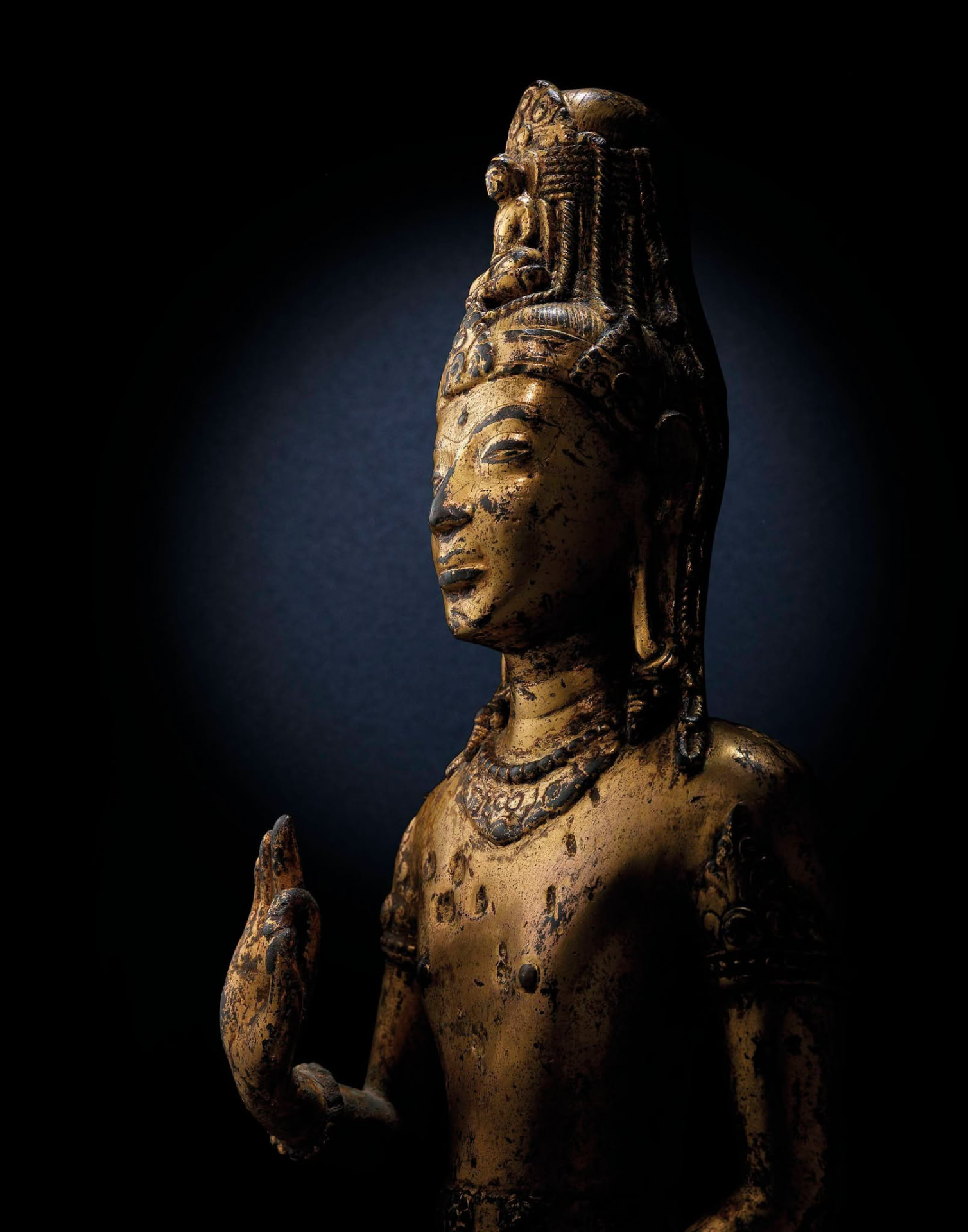
My neighbor is an industrious man who slaughters pigs every morning around five. While I have grown somewhat accustomed to the horrific screams, I still find refuge in reciting mantras for the swift release of the poor creatures—that is, when a reflexive "Shema Yisrael" or "Bismillah" doesn't slip out by force of habit.
We also happen to live just down the hill from the valley's historic Guanyin Temple, so these cries for liberation surely reach an ever-attentive ear.
Throughout the world of Northern Buddhism, the Bodhisattva Guanyin (Sanskrit: Avalokiteshvara) is known as the embodiment of the compassionate, responsive, and all-hearing aspect of the Buddha-nature. In the kingdoms of Nanzhao (roughly the ninth century) and Dali (until the Mongol conquest), Guanyin took on a broader significance as a dynastic founder, a source of political legitimacy, and a unifying symbol for the region as a whole.
The roots of the local Guanyin cult are embedded in Yunnan’s unique position at the crossroads of China, Tibet, Southeast Asia, and India. As a product of these intersecting circles of power—and despite the fact that most of ancient Yunnan’s scriptures and Buddhist knowledge arrived from the Chinese heartland—the Dali elites tended to emphasize Mother India as their source of religious authority, for obvious reasons.
This found expression in the unique figure of "Acuoye Guanyin" (from the Sanskrit *Acharya* [priest/teacher] or perhaps *Ajaya*, "The Unconquered"), a local iteration of the Bodhisattva that blended Indian, Burmese, and indigenous elements to become the representative symbol of the Dali Valley and western Yunnan at large.
With the collapse of Nanzhao and the establishment of the Dali Kingdom, this legacy was preserved and expanded. Guanyin became the focus of a broader religious system, influenced by both the folk piety of the Chinese world and the esoteric networks prevalent throughout medieval Buddhist East Asia.
During this period, as Chinese Buddhist influence deepened, the Lotus Sutra became a central tool in shaping Guanyin’s image as a universal savior. Simultaneously, a rich culture of temples, illustrated manuscripts, and state patronage developed in Dali, marking its transition from a warring empire to a center of trade and culture.
This legacy endured long after the fall of the Dali Kingdom, centered on the Guanyin Temple south of the old city. Although the current complex was rebuilt after its destruction during the Great Muslim Rebellion of the nineteenth century, the site’s sanctity is ancient. It remains a pilgrimage destination for people from Yunnan, inland China, and even Burma, Thailand, and Tibet, particularly during the three seasonal festivals.
During a visit this week, prompted by an old photo I found online, I saw that parts of the temple—specifically the stone pavilion above the "Life-Liberation Pond" at its center—survived the Cultural Revolution. It continues to serve as a regional echo for all sentient beings, and one hopes, for the bound pigs as well.
Related writing
Field Note
The Ginger Garden
On gardening, rhizomes, and a small botanical obsession in a Dali courtyard.
Essay
Rivers and Lakes
“When the springs dry up, the fish huddle together, gasping to keep one another moist; it would be better if they could forget each other in the rivers and lakes.” (Zhuangzi)
Essay
The Humid South: Miasma, Body, and Space in Southern China
On the perception of the Chinese South as an ecological and metaphysical frontier—and how a landscape of danger became the empire’s economic and intellectual engine.