Travel Journal
By Noam Backner
The Walled Garden of the Chinese Market
Navigating Beijing’s antique stalls, where ancient artifacts spark unexpected encounters between a Jewish traveler and the merchants of Central Asia.
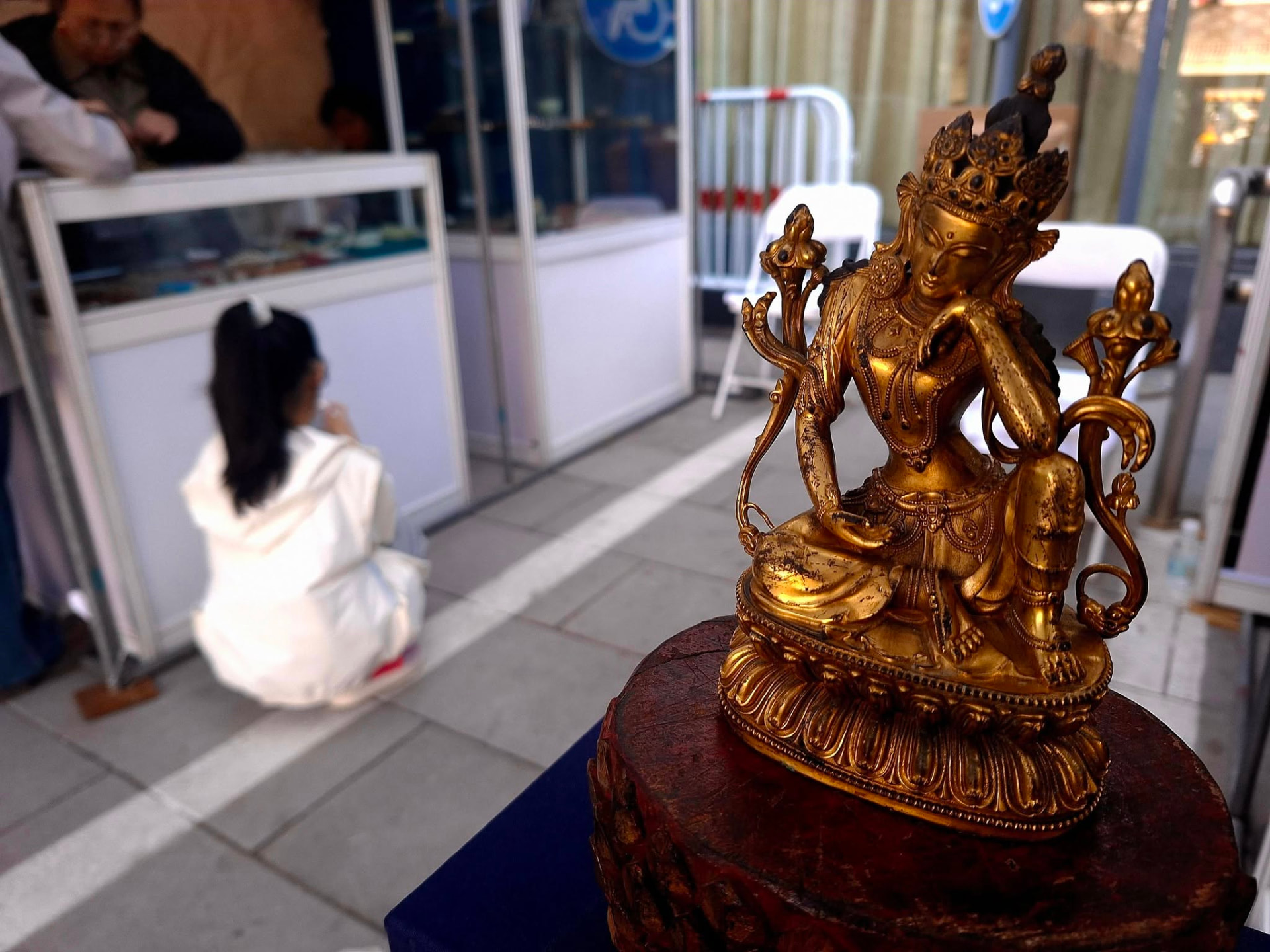
Antique markets are, for me at least, an irresistible draw. In China, it is hard not to be struck by how the engagement with the past is never merely an aesthetic or emotional whim, but a system—at times a closed one—of endless internal citation.
For me, these markets offer a golden opportunity, not only to sharpen my eye for the authentic over the counterfeit, but to hold precious objects I will likely never own. Every time I carefully lift a "hare’s fur" bowl, a gilded Bodhisattva, or a Tibetan wolf-striker, I grasp the physical weight of history. I find a renewed appreciation for the immense investment of study and time required to create such treasures in their own day.
As a Eurasian emporium, Beijing’s markets also provide a prime chance to encounter characters from across the South and Central Asian continuum—many of them traders of the lapis lazuli and carnelian beads for which the Chinese have a particular appetite.
I usually choose when and how to present myself in response to the inevitable questions of origin. Yet recent events have not deterred me; if anything, they have spurred me to test the local reaction to a lone Jew who speaks fluent English, reasonable Chinese, and broken Persian.
The results were somewhat predictable, ranging from the veiled hostility of Punjabi Pakistanis to an initially cautious but ultimately cordial reception from Afghan Tajiks. There was a certain roguishness from the Pashtuns, and the most sympathetic response of all from the few Iranians, which included mutual wishes for the health of families abroad and concluded with shared predictions of regime change.
Perhaps more than anything, diving into the archives of the Chinese market—if only for two timeless hours—feels like taking shelter within a walled garden. There, all of us—Jews and Persians, Pashtuns and the people of Hindustan—reveal ourselves to be momentary guests. Even those who stay for years find that, here, the sting of discord is left far outside the dragon gates.
Related writing
Essay
Between Mysticism and Revolution: The Poetry of Khomeini
On Persian verse, mystical insight, and the fine line between spiritual transcendence and political authority.
Field Note
The Ginger Garden
On gardening, rhizomes, and a small botanical obsession in a Dali courtyard.
Essay
Rivers and Lakes
“When the springs dry up, the fish huddle together, gasping to keep one another moist; it would be better if they could forget each other in the rivers and lakes.” (Zhuangzi)