Essay
By Noam Backner
Chinese Thought in a Fractured World
On Confucius, Han Fei, the Daoists, and the possibility of contemplating the present outside the political din.
I generally avoid politics like the plague, certainly in my writing. This isn't to say I lack reasoned opinions on specific issues, and there are, of course, everyday matters close to my heart.
On the other hand, I am drawn to the idea of creating an online space that at least attempts to float in a kind of imagined timelessness—above the dust of the daily grind, while wallowing in subjects that I, at least, find fascinating and full of color.
Nor do I believe this is a matter of self-indulgence; it is a conscious choice. Beyond that, I see this as a meeting place—and not an imaginary one—for readers of vastly different religious and ideological backgrounds, and may they all be blessed.
As I have noted, I live in the heart of a culture where everything is so political that, in the end, nothing is actually political at all. I also reside within a culture of nuance, hierarchy, and deep historical memory. As a resident alien, I am forced to peel away wearying habits—like soaked socks one only notices once they are removed—while the innocence of that same foreignness allows for the space of time, study, and error.
There is also merit to the claim that Chinese thought, and perhaps Chinese cognition itself, tends to emphasize context and relativity, constant change as a given, the capacity to contain contradictions, and a weakened inclination toward rigid categories. This is, of course, a broad generalization; these are not innate traits but habits of attention and processing acquired through conditioning, multi-generational education, and traditions of thought that run like ancient code on the battle-tested hardware of an eternal state.
The seemingly fractured world of 2026 is not the Warring States period that served as the cradle of Chinese thought, but to some extent—if only by analogy—it is not fundamentally different, if only because of the ever-present human factor. If that is the case, why should the ancients of China not remain relevant, even when they are answering
different needs at different resolutions?
In this sense, daily contact with Chinese thought is not some glossy, satin-clad Orientalist fantasy, but a constant and challenging engagement with fundamental questions applicable to any society.
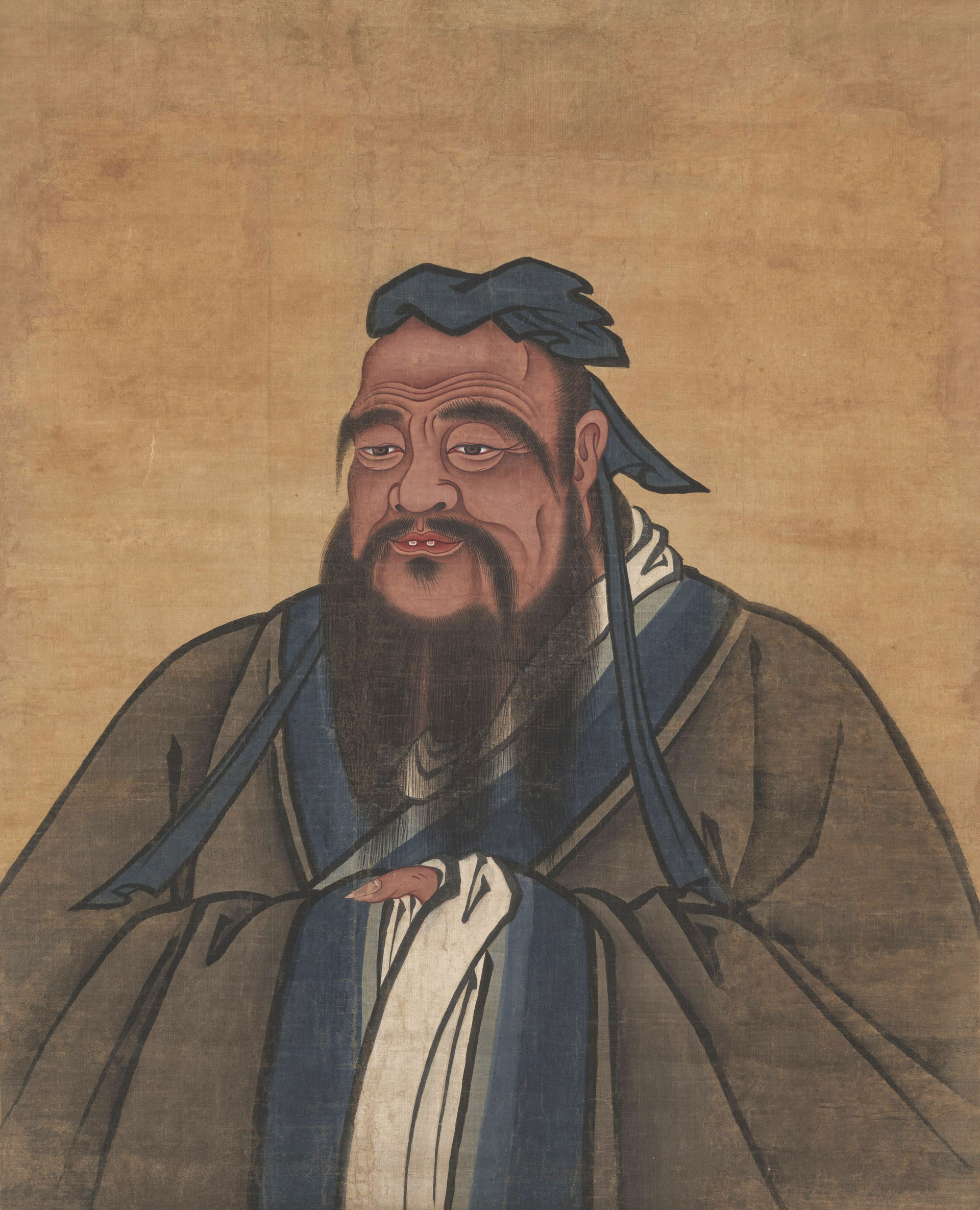
Kongzi taught that judgment begins with understanding the real relationships between people and the webs of hierarchy that govern them. Even when this meant—certainly among his successors—that the yearning for a philosopher-king in both the domestic and public spheres opened a door and provided moral sanction for tyranny, these ideas also enabled the rapid restoration of a functioning system out of a war of all against all, without the blinding confusion that obscures the needs of the hour.
Han Fei and his cohorts, meanwhile, loathed the moral pretensions of Confucius and his peers. They believed the worthy ruler was not necessarily the wisest person in the room—and perhaps even the opposite—but rather the one capable of putting a boot to the neck of an ignorant population with the help of skilled deputies (who just happened to be, again, Han Fei and his friends), ensuring the masses did not chatter themselves to death.
And perhaps most relevant of all—at least to my taste and for purely biographical reasons—are the various Daoists. They warned not only that those who value their souls should stay far from the palace, but also that we must not equate the conceptual outlines that guide us with reality itself. To borrow a metaphor: the murderous monkey-mind we inherited does not always know for certain what is the moon and what is a faint reflection in murky water. The relativity between the "myriad things" is a far better basis for understanding reality than rigid, essentialist categories, which inevitably prevent both the individual and society from making informed choices that might approximate that vague concept: wisdom.
Perhaps the primary message I try to adopt—one that seems supported to some degree by thinkers and scientists from the decadent West—is that the reclusive experience creates an opening, however tentative, for a forgiving and ideal perception of reality: seamless, and mindful of the fact that sharp distinctions between one thing and another create nothing but a bleeding rift, from which the myriad demons may inadvertently emerge.
In this sense, contraction leads to expansion, which in turn leads to a growing understanding that focus and restraint are the basis of all ethics. As the ancients once homilized, regardless of which East they hailed from: a fence for wisdom is silence.
Related writing
Essay
Between Mysticism and Revolution: The Poetry of Khomeini
On Persian verse, mystical insight, and the fine line between spiritual transcendence and political authority.
Field Note
The Ginger Garden
On gardening, rhizomes, and a small botanical obsession in a Dali courtyard.
Essay
Rivers and Lakes
“When the springs dry up, the fish huddle together, gasping to keep one another moist; it would be better if they could forget each other in the rivers and lakes.” (Zhuangzi)