Essay
By Noam Backner
The Eight Flavors of Beijing
On the unique role of sweetness in Chinese cuisine and the crumbly paradise of the capital’s traditional pastry shops.
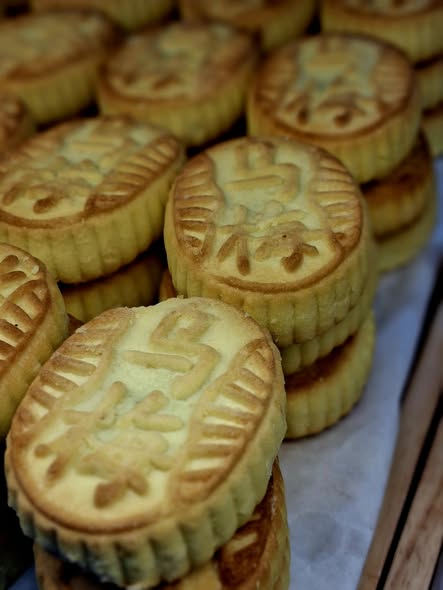
China is rarely thought of as a powerhouse of sweets, despite the constant, unmistakable presence of sweetness throughout its cuisine.
This perception—mostly an outsider’s view—likely stems from how sweetness is woven into the Chinese culinary tapestry, and perhaps from the specific textures expected of it.
Unlike the modern Western preference for dairy-based, semi-soft desserts, Chinese cooking often integrates sweet notes directly into main courses, including meats, or serves distinctly sweet dishes alongside savory ones rather than as a grand finale.
Even this distinction requires qualification. Exceptions abound, whether from the Islamic confectionery traditions that arrived during the Mongol era, or in liquid and gelatinous sweets that parallel Western compotes but often fly under the radar of foreign palates.
Yet even within these differences, one finds strongholds of sweetness that align more closely with Western concepts—ancient combinations of fruit, sugar, fat, and flour that follow the pre-modern, fat-based recipes once common across the Old World.
In this light, the existing range of Chinese sweets—particularly the lard-based pastry known as *su*—is strikingly reminiscent of medieval European confectionery, predating the early modern butter revolution and the era when cheap sugar began to flow through the veins of global trade.
Regardless, stepping into the venerable Daoxiangcun, or any of its counterparts dotting the capital’s streets, allows any lover of ma'amoul, ba'aba, or other dry, coffee-craving biscuits to enter a crisp, generously filled paradise. These are the "Eight Flavors of Beijing," as the traditional assortment is known.
I usually avoid dense doughs myself, but I cannot help but admire the aesthetic: the variety, the form, and the symbolism. With fillings ranging from pumpkin and jujube paste to sweet bean and hawthorn jam, these treats encapsulate an imperial kitchen, a regional melting pot, and a deep-rooted culture of hospitality—all tightened, baked, decorated, and packaged exactly as they should be. Perhaps there is nothing finer.
Related writing
Essay
Between Mysticism and Revolution: The Poetry of Khomeini
On Persian verse, mystical insight, and the fine line between spiritual transcendence and political authority.
Field Note
The Ginger Garden
On gardening, rhizomes, and a small botanical obsession in a Dali courtyard.
Essay
Rivers and Lakes
“When the springs dry up, the fish huddle together, gasping to keep one another moist; it would be better if they could forget each other in the rivers and lakes.” (Zhuangzi)