Essay
By Noam Backner
The Fasting of the Heart
Exploring the Chinese tradition of 'zhai' as a holistic preparation for the sacred, and Zhuangzi’s radical concept of internal emptiness.
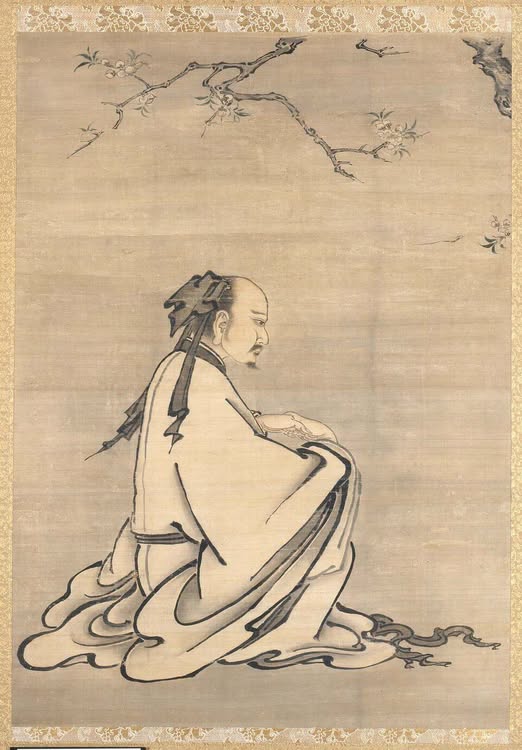
In the Chinese tradition, the concept of fasting—*zhai* (齋)—was never just about avoiding food. It was a process, often a gradual one, of preparing oneself for an encounter with the sacred.
This stems from a worldview where the state of the body, the mind, and one’s outward conduct are inseparable from the cosmic order. Fasting, then, is an essentially ascetic act that might involve shifts in diet, dress, speech, and intention. Its goal isn't necessarily internal renunciation, external atonement, or psychological deprivation; rather, it serves as a structured path toward transforming the human being into an open, receptive vessel.
A striking expression of this appears in the *Zhuangzi*, where Master Kong (Confucius) tells Yan Hui that abstaining from food and wine is merely the 'fasting of sacrifice'—a nod to the rigid rituals of the Bronze Age. One who aspires to the heights, he argues, must instead seek the 'fasting of the heart' (心齋).
"Do not listen with your ears, listen with your mind," the text advises. "In fact, do not listen with your mind, but listen with your spirit. Listening stops at the ear; the mind stops at recognition. But the spirit is empty, and it waits for all things. The Way gathers only in emptiness, for emptiness is the fasting of the heart."
If all of this sounds familiar and perfectly ordinary, then everything is exactly as it should be.
Have an easy fast, and I’ll see you on the other side.
Related writing
Essay
Between Mysticism and Revolution: The Poetry of Khomeini
On Persian verse, mystical insight, and the fine line between spiritual transcendence and political authority.
Field Note
The Ginger Garden
On gardening, rhizomes, and a small botanical obsession in a Dali courtyard.
Essay
Rivers and Lakes
“When the springs dry up, the fish huddle together, gasping to keep one another moist; it would be better if they could forget each other in the rivers and lakes.” (Zhuangzi)