Essay
By Noam Backner
Flowers in the Yunnanese Kitchen
On pomegranate blossoms, rhododendrons, and the foraging traditions that bridge the garden, the mountain, and the stove.
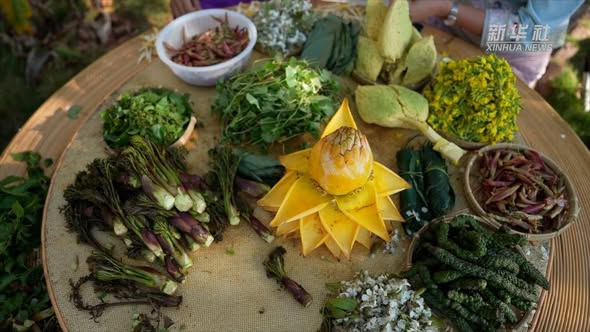
Yunnanese cuisine, if we can call it a single thing, often feels like the seasoning and techniques of Inner China applied to a wilder geography.
The link between a cuisine and its landscape is always evident, but Yunnan’s botanical wealth makes its heritage uniquely diverse. Here, foraging traditions seem more resilient, more alive, than in almost any other region.
One of the most distinct hallmarks of Yunnanese cooking is the use of flowers. While these traditions belong to a broader diet of shoots, roots, and wild mushrooms, they also serve as a seasonal marker for spring and a medicinal defense against the rising humidity.
Consequently, seasonal markets and local kitchens are woven through with various inflorescences—some cultivated, some wild, gathered from nearby gardens or distant slopes. Last week’s meals were a case in point: hosting friends gave us the chance to try two floral dishes from opposite sides of the cultural divide. The first was pomegranate blossoms—specifically the calyx—which had been blanched and then lightly stir-fried with the chive and chili mixture so common to the region.
The dish was a surprising mix of crunch, bitterness, and a lingering sweetness, perhaps from the nectar reservoirs at the base of the calyx; it felt, in the best way, medicinal. The pomegranate is not native to these parts, of course, but its migration from the Iranian plateau and the Middle East enriched the local pantry. It seems the local foraging impulse simply expanded to include the tree’s abundant flowers.
The second dish was a staple of the Yunnanese spring: rhododendron blossom soup. The cautious observer will note that many rhododendron species contain lethal neurotoxins; rhododendron honey, or "mad honey," is a legend of Himalayan culture and was even deployed as a chemical weapon during Greco-Roman campaigns in the Anatolian highlands.
Nevertheless, Yunnan is home to a vast array of rhododendron species—many of which are the ancestors of modern garden varieties—and at least two are kitchen staples. Locals warn that the purple species are the most toxic and must be avoided, but even the "sweet" white blossoms are meticulously processed to remove all green parts and reproductive organs. The delicate texture of the blanched petals reminded us, more than anything, of a kind of botanical fugu.
At its best, Yunnanese cuisine represents the survival of ancient ways, where the reaching hand finds abundance in the home garden and on the mountain, in the field and in the wild—thriving on both sides of the gateway to domestication.
Related writing
Essay
Between Mysticism and Revolution: The Poetry of Khomeini
On Persian verse, mystical insight, and the fine line between spiritual transcendence and political authority.
Field Note
The Ginger Garden
On gardening, rhizomes, and a small botanical obsession in a Dali courtyard.
Essay
Rivers and Lakes
“When the springs dry up, the fish huddle together, gasping to keep one another moist; it would be better if they could forget each other in the rivers and lakes.” (Zhuangzi)