Essay
By Noam Backner
Of Saffron and Strangers
A meditation on identity, migration, and the cultural geography of saffron between Persia, Tibet, and China.
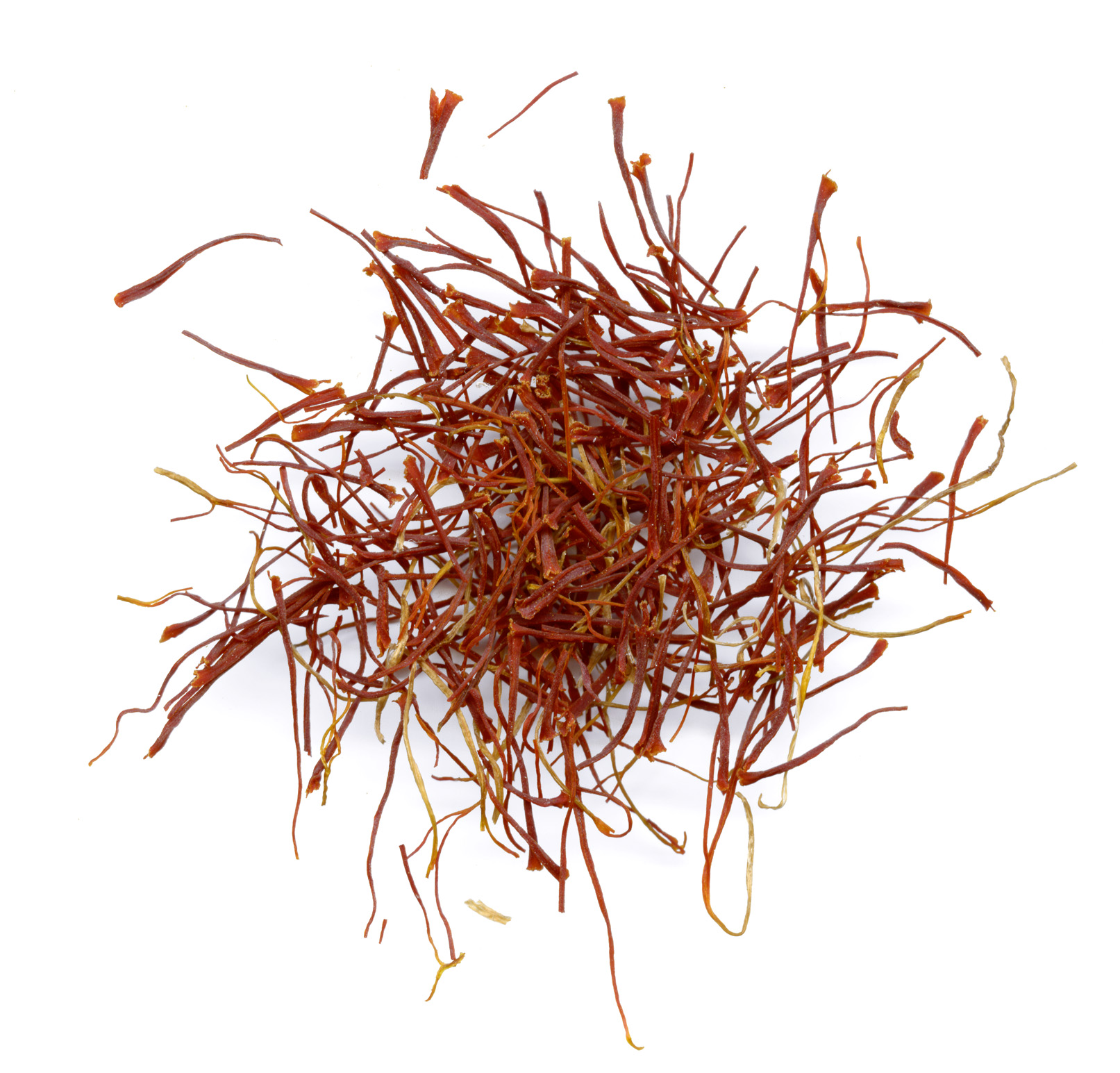
Of Saffron and Strangers
Identity is an elusive thing, especially when it is so frequently challenged here, and when the thin red line between the self, the other, and that strange collective known as "them" is blurred by time, place, and circumstance.
In China, saffron is a relic of the Indo-Iranian cultural wave that brought not only Buddhism and the chair to the Central Plains, but a whole array of sensory-stimulating ingredients.
Saffron appears early in Chinese texts, primarily in diplomatic records, medical treatises, and ritual literature—appearing, for instance, in the Golden Light Sutra alongside some thirty other aromatics. As a spice, however, it never gained much traction until the Mongol period; even then, its use eventually retreated into the Chinese medicine cabinet, where it remains to this day.
Yet, if you visit any Chinese apothecary or a shop selling tea and incense and ask about the origin of the saffron in those elegant glass vials, the shopkeeper will invariably tell you it comes from Tibet. Even if this seems natural given the modern Chinese name for the spice—Zànghónghuā, or "Tibetan Red Flower," which likely preserves an old trade route—it is hard to believe the proprietors are entirely ignorant of the origin of these sealed packages, many of which are clearly adorned with curling Persian script.
One might call this a case of willful cultural blindness. Much like the sub-tropical dates that are always claimed to come from the northern province of Xinjiang, these labels do not necessarily denote a trade hub like "Damascus" steel or Bukhara rugs. Rather, they reflect a tendency to grant something intrinsic value only if it originates within the walls of the Chinese garden—or, at the very least, at its threshold.
I think of my Persian teacher, a long-time exile here by virtue of a complex fate, her life woven from individual threads that unravel and re-form into the same tangled scarlet knot that constitutes a person's history.
So often, a cautious probing across the desert of foreignness only serves to intensify it, even as you strive with all your might to dissolve it. A clumsy choice of words—or worse, a compromise word used for lack of precision—repeatedly hits that same wall, transparent yet as hard as armor.
Perhaps silence is preferable—not as a vessel for some pretense of hidden wisdom, but as the only place where assumptions cease to materialize, or at least remain buried in the darkness of the throat.
Perhaps with a little more effort and persistence, another word or two will take root in the soil of memory and further down the tongue, saturating and washing away the abyss of otherness with living water.
Perhaps with a little more grace and time, there will be saffron cookies and a pot of tea, almost like in the distant home of someone else.
Flowers will surely rise then, too, at the edges of the desert.
Related writing
Field Note
The Ginger Garden
On gardening, rhizomes, and a small botanical obsession in a Dali courtyard.
Essay
Rivers and Lakes
“When the springs dry up, the fish huddle together, gasping to keep one another moist; it would be better if they could forget each other in the rivers and lakes.” (Zhuangzi)
Essay
The Humid South: Miasma, Body, and Space in Southern China
On the perception of the Chinese South as an ecological and metaphysical frontier—and how a landscape of danger became the empire’s economic and intellectual engine.