Travel Journal
By Noam Backner
Immortals and Bunkers
A journey up Mount Fu Shan, where ancient Chinese mountain traditions collide with the concrete ruins of German fortifications.
Beyond the demands of work, I haven't felt much of an internal spark for writing lately. Setting aside the events of the past year—some of which brought very real, personal pain—it feels as though words themselves are simply crumbling under their own weight.
I tend to assume that what I experience in my own small way must reflect something of the zeitgeist, especially now, when the sheer volume of information flooding our lives is matched only by the shallowness of its murky stream.
Since the total 'enshittification' of the web offers no safe harbor—and likely never will—from the doomscroll or the digital hijacking of the nervous system, one might as well head for the mountains. These are places saturated with potential, even when situated in the heart of a metropolis like Qingdao, and even when they aren't entirely shielded from the reach of a 5G signal.
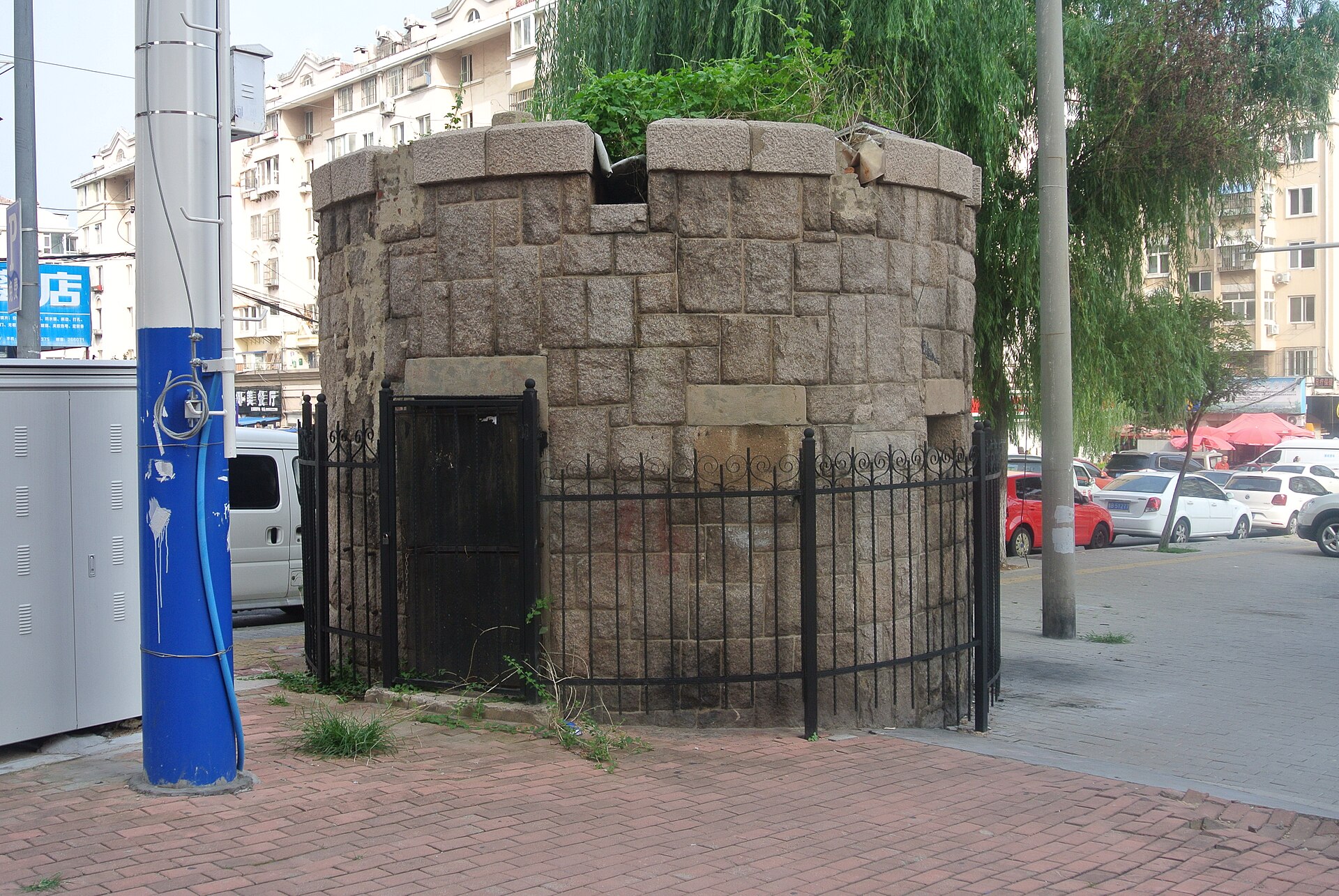
The mountain of choice this time is Fu Shan ('Floating Mountain'). Unlike its elder brother, Mount Lao—one of China’s venerable Daoist peaks—this one is said to house nothing less than old German bunkers.
German bunkers might seem like an oddity on the shores of the Yellow Sea, but they make perfect sense if one recalls Qingdao’s brief tenure as the crown jewel of the Second Reich in East Asia—in fact, its only jewel. The masterful construction of Qingdao as a showcase of German modernity, an idealized and short-lived colony, included not only noble institutions like railway stations, banks, hospitals, a famous brewery, and an exquisitely crafted sewage system, but also the embryonic markers of twentieth-century total war: defensive fortifications, artillery batteries, and command posts atop the peaks of Bismarck, Moltke, and the height once known as Kaiserstuhl.
Despite its modest stature, Mount Fu still provides everything one expects from a proper Chinese mountain. Its gentle, forested slopes give way to picturesque and occasionally dramatic rock formations. It is no wonder that granite peaks like these became retreats for all sorts of recluses and seekers—both the righteous and the wayward—if not the actual dwellings of immortals.
We don't have many accounts of the deeds of actual immortals after the Ming Dynasty. Whether this is due to the arrival of the first Jesuits or the Middle Kingdom’s entanglement in the global silver economy is anyone's guess. Either way, one could argue that Daoist immortals and long-range cannons have a hard time coexisting on a mountaintop, especially one as humble as Fu Shan. All that reinforced concrete—German, Japanese, or Maoist—decorating the crest hardly invites expansive breathing or the slow, gnarled-fingered brewing of herbs.
And so, you are destined to wander back and forth across a deserted ridge, whether you call it Fu Shan or Prinz-Heinrich-Berg, never entirely sure if you came looking for immortals or to descend into the depths of a dark bunker.
Either way, the point is clear. Extract yourself for a moment from the infectious screen of words, take a deep breath, and look around at a nameless mountain. You will know then—and for certain—on whose threshold you are standing.
Related writing
Essay
Between Mysticism and Revolution: The Poetry of Khomeini
On Persian verse, mystical insight, and the fine line between spiritual transcendence and political authority.
Field Note
The Ginger Garden
On gardening, rhizomes, and a small botanical obsession in a Dali courtyard.
Essay
Rivers and Lakes
“When the springs dry up, the fish huddle together, gasping to keep one another moist; it would be better if they could forget each other in the rivers and lakes.” (Zhuangzi)