Essay
Jewish Traders on the Silk Roads
An eighth-century Judeo-Persian letter from Khotan offers a rare view of Jewish trade and daily life amid war in the heart of Asia.
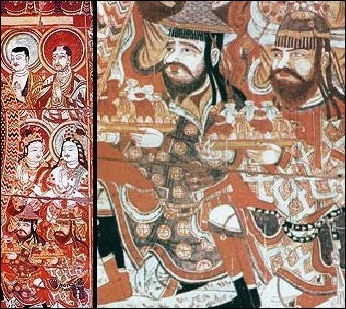
In the wake of the conquests that, as we have seen, drove the Persian court into Tang territory, the earliest evidence of Jewish trading networks also begins to emerge from the deserts of ‘Chinese’ Central Asia.
The first Jews in China may well have reached the region through trade networks established before the Muslim conquest, whether travelling alongside them or under their protection. Their history at this early stage remains obscure. The first direct evidence of Jewish travellers in the region dates from the eighth century.
Taken together with the rock inscriptions at Tang-i Azao and the later documents of the Afghan Geniza, dating to the tenth and eleventh centuries, these traces suggest a continuity of Jewish settlement and trade across the eastern Iranian world, including what is now western China. This presence may have begun in the pre-Islamic period, alongside Iranian and, later, Turkic trading networks that extended towards the cities of the Far East.
This accords with possible evidence of established Jewish settlements around the Hindu Kush, Pamir and Tian Shan. By the ninth century, sizeable Jewish communities may already have existed in the cities of Central Asia, forming an important minority south of the Amu Darya in the centuries before the Mongol invasions. An obscure passage in the geographical work Hudud al-‘Alam even mentions a settlement near present-day Khujand with the delightful name Yahudilik—a Jewish name with a Turkic suffix—although no further details survive.
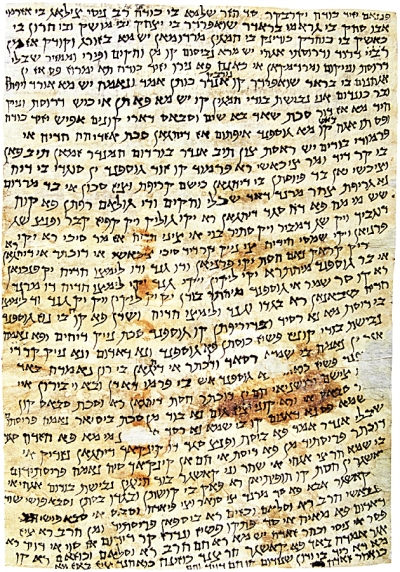
One of the most moving documents associated with this early Jewish trade in Central Asia surfaced in western China in 2004. Its handwriting, formula and place of discovery suggest that it may have been written by the same hand as a document found a century earlier by the renowned Hungarian-Jewish explorer Aurel Stein at Dandan Oilik, on the edge of the Taklamakan Desert.
A letter from Khotan
In the name of God, the benevolent Lord. A hundred thousand greetings from me, Rabbi, to my lord Nissi Chilag; to the honoured Abu Ishaq; to my dear brother Shwapradar; to Isaac, Mushk, Aaron and Hashak; to my little sister Khudanak; and to all your people, old and young. Many greetings from the local ruler—probably Visha Vaham, then king of Khotan—who treated us with great generosity. Know that the gifts we ordered are in good condition.
When I brought the perfume, the ruler saw it on the young woman and at once ordered the chikashi, a Khotanese courtier: ‘Hurry and hand over the sheep belonging to this Sogdian!’ The chikashi and the man could not agree, but the ruler grew angry and refused to listen to the wicked men who spoke against us. He gave us four marand—perhaps soldiers—as an escort. On the tenth day of the sixth month, Shavili, Hakim and two servants went up into the mountains.
The gift for the ruler was one jar and one qafiz—about three litres—of capers, five sheng of dugvich, one sheng of dambir, and one stater—a Greek measure adopted through Persian—of the precious Chinese fragrance, probably musk. The gift for Sikhi was one roll of silk and one shirt. You did well! The gift is one roll of silk, two measures of sugar and two measures of limchu. For the panguan… Each of the two marand responsible for counting the sheep is to receive one li-jin, one measure of sugar and two measures of limchu.
The shepherds are to receive clothing, sugar and limchu. They went up into the mountains, but we have not yet received the sheep, although they promised to deliver them properly. You wrote that they still wanted payment for the sheep and that you refused. Know that you did not act wisely. If this letter reaches you before the ruler’s daughter has departed, please pay whatever sum she asks for the sheep and travel with her.
You are the light of my eyes, just as this daughter is to the ruler, so thank her warmly. If you do, we shall lose nothing. I send you many letters, but I do not know whether they reach you. Shavili entered Khotan on the eighteenth day of the fifth month. On the twenty-fifth, the ruler sent two runners to his daughter, and through them I sent you thirty letters. I wrote to you about every city except Kashgar.
Here is the news from Kashgar: they returned and killed all the Tibetans. The deputy military commissioner set out for Kashgar with five hundred cavalry and infantry. The commissioner of soldiers and horses then sent a special envoy concerning battle, peace and victory. I contributed a sum worth one hundred strings of coins to the war effort.
You advised me concerning David, the son of Nissi, and your nephew, and also concerning battle, peace and victory: if the war reaches Kashgar, spare nothing, whatever they ask. I followed your advice, as well as that of David and the nephew. Many blessings! I write to tell you that I, Hakim the servant and Shavili the bastard are all in good health.
By the power of my lord God, the children of the household remain well. I also inform my brother Shwapradar that Nurbak reached Khotan with your letter, which I received. I read what you wrote and saw that you are all safe and well. We rejoiced from afar and gave thanks before my lord God. And now know this: we have obtained the sheep.
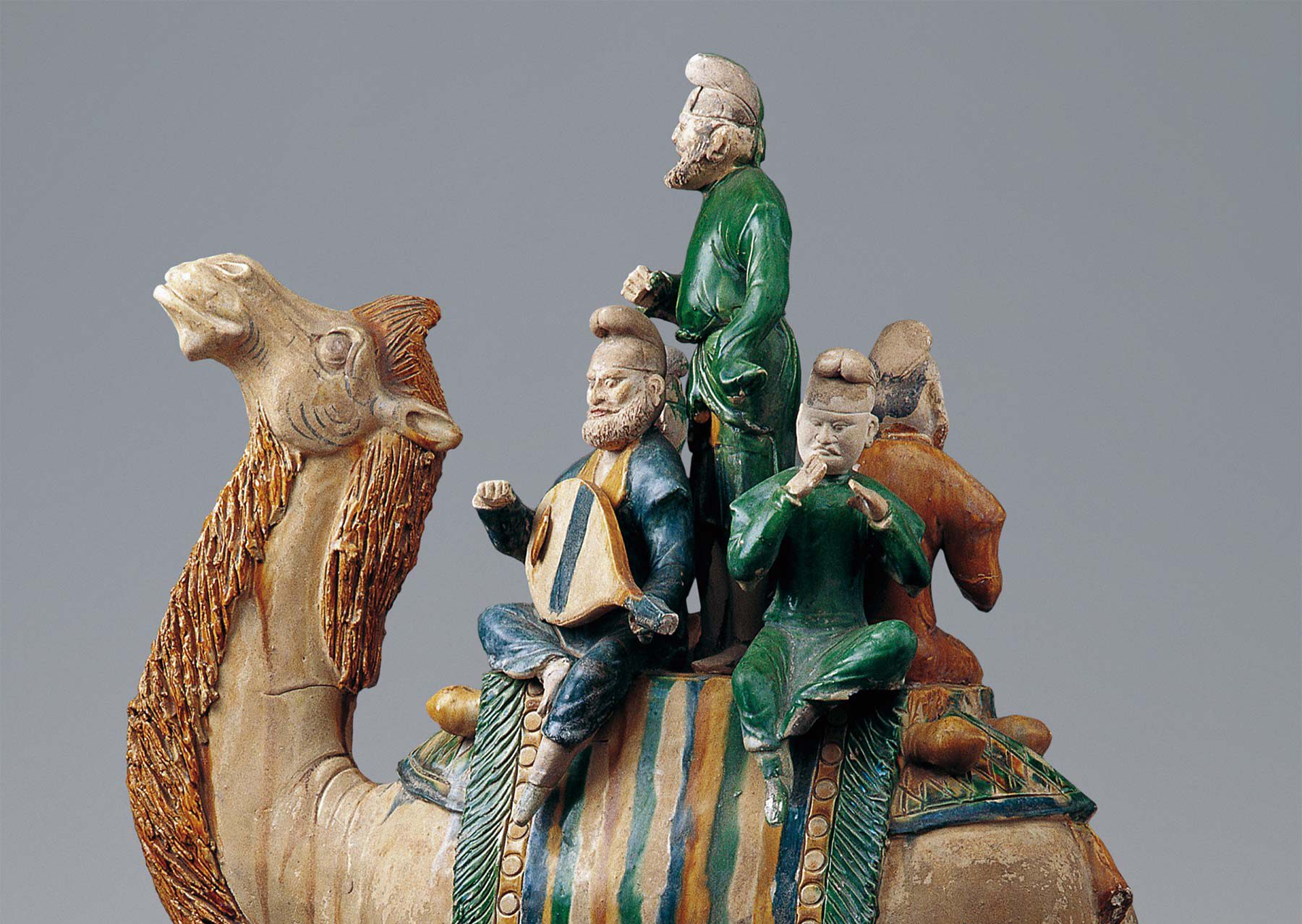
There is not enough space here to dwell on all that this letter means, or on the historical moment it captures. It is, nevertheless, a dramatic document: a distinctly Jewish witness to a changing of the guard in the heart of Asia. The Arab conquest of Central Asia, the Battle of Talas in 751 and the An Lushan Rebellion of 755–763 brought far-reaching change to both ends of the continent. This modest merchant’s letter offers a rare, entirely civilian view from ground level—of life amid the upheaval, and of a shrewd traveller doing his best to earn a living in turbulent times.
The densely written letter is also rich in social, political, economic and cultural clues to the lives of Central Asian Jews in this period. The anonymous Jewish merchant—called ‘Rabbi’, perhaps as an honorific or a mark of learning—represents an early New Persian-speaking community, before the Persian form of the Arabic script became the standard writing system across the Iranian world. This letter and its earlier companion are the oldest known texts in New Persian.
The letter also contains a linguistic layer derived from Sogdian. Sogdian and Khotanese—the language of the Buddhist kingdom in which this Jewish merchant conducted his business—were eastern Iranian languages, now extinct, then enjoying their final period of vitality.
The letter portrays a western Persian-speaking Jewish community deeply rooted in the eastern Iranian world, its long-distance trade profoundly shaped by regional politics. As junior partners in an Iranian trading community—and identified by the king of Khotan himself as ‘Sogdians’—these Jewish travellers traded in whatever could profitably be carried: silk, inevitably, but also Tibetan musk, sugar and other luxuries. Most were measured in Chinese units and priced in Chinese-style bronze coinage.
The breakdown of Chinese rule in eighth-century Central Asia emerges vividly in the report that Tibetan imperial troops had been killed at Kashgar, perhaps by Turkic Uyghur forces. The passage captures a singular and now largely forgotten moment in the struggle for the heart of Asia.
The merchant’s complaint that his roughly thirty letters had gone unanswered may point to the serious disruption that regional warfare caused along the trade routes. Yet it also reveals the regular traffic that ordinarily connected the oasis towns between China’s gateways and the Sogdian cities to the west. His close familiarity with the king of Khotan’s court and his assured dealings with Chinese officials—the remnants of a crumbling Tang administration—attest both to his professional success and to the distinctive bonds forged in remote places between ruler and merchant, administrator and soldier.
We will probably never know what became of our rabbi. But his greeting of peace—in Persian, written in square Aramaic letters—is a fitting reminder that, even in times of war and upheaval, we were already walking the dusty roads together. God willing, we shall do so again.
Shabbat shalom.
Related writing
Essay
Which Sky Would I Choose?
‘My heart was asked: Which heaven would you choose? It replied: The wise do not speak.’ — Omar Khayyam
Essay
Demons, Saints and Black Pens
Muhammad Siyah Qalam and the Eurasian world the Mongols left behind.
Essay
In the Gates of Turan
Why the Shahnameh's oldest quarrel is an ecological one: the sown land against the sea of grass.