Essay
By Noam Backner
The Lychee, the Messengers, and the Scholar
On Yang Guifei, Cai Xiang’s agricultural treatise, and the accumulation of botanical knowledge in China.
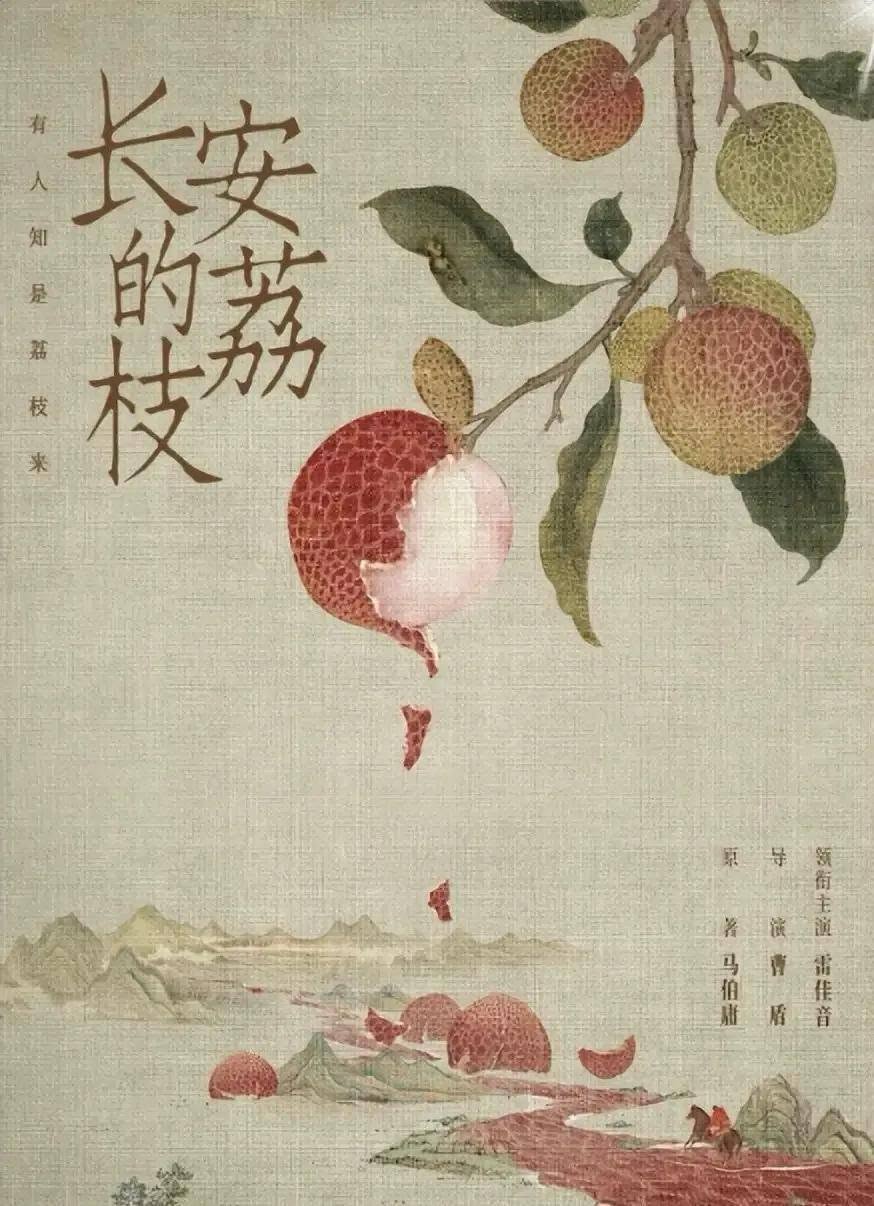
To further qualify yesterday’s notes: lychee season has arrived. Fine mounds of select fruit already grace the markets, including the variety colloquially known as the "King Lychee," which is nearly double the size of the common local types.
Long before the tropical durian became a national obsession, the lychee held a position of primacy in Chinese culture. Its status, both in China and abroad, likely stems from a biochemical profile and translucent texture that make it, at its peak, one of the world’s finest fruits.
These qualities were not lost on the ancients. It is well known that Yang Guifei, the consort of Emperor Xuanzong and one of the "Four Beauties" of ancient China, was so enamored with the fruit that the Emperor established a rapid courier service for her. This relay stretched from South China—or perhaps Sichuan, according to a more recent hypothesis—all the way to the imperial city of Xi'an. To the scholars of the past, this institution was an eyesore, a symbol of the internal rot that eventually triggered the disastrous An Lushan Rebellion.
The lychee also inspired one of history's early specialized agricultural treatises. In his work on the tree, the Song Dynasty scholar Cai Xiang identified Eastern Fujian as the heart of cultivation, where specialized farmers developed dozens of varieties. The most prestigious was the "Chen Purple," prized for its superior flavor, deep color, and relatively small pit.
Cai’s treatise displays a keen interest in horticulture, noting how different climates and soils affect yields, while also addressing the commercial logistics of preserving and transporting the fruit to distant provinces.
While the lychee deserves its due, Cai Xiang's work—unique as it was for its time—is just one example of how Chinese scholars approached the myriad phenomena of their world. These writings were part of a constant effort to understand the observable environment. This scholarly tradition dedicated to flora and fauna did not view nature as distinct from the human realm; rather, it was inextricably linked to ethics, governance, and economics.
Eventually, translations and summaries of these Chinese works reached the West through Jesuit mediation. While the classification system devised by Linnaeus—who is said to have owned at least one copy of Li Shizhen's famous *Bencao Gangmu*—was primarily rooted in European intellectual traditions, the Chinese botanical tradition clearly played its part. It contributed to the expansion of global knowledge, helping to build the critical mass of biological data that allowed for modern codification, if only by way of comparison.
Related writing
Essay
Between Mysticism and Revolution: The Poetry of Khomeini
On Persian verse, mystical insight, and the fine line between spiritual transcendence and political authority.
Field Note
The Ginger Garden
On gardening, rhizomes, and a small botanical obsession in a Dali courtyard.
Essay
Rivers and Lakes
“When the springs dry up, the fish huddle together, gasping to keep one another moist; it would be better if they could forget each other in the rivers and lakes.” (Zhuangzi)