Essay
By Noam Backner
Not Gazing Enough at the Mountain
On observation, landscape painting, and the mountain as a site for the practice of thought.
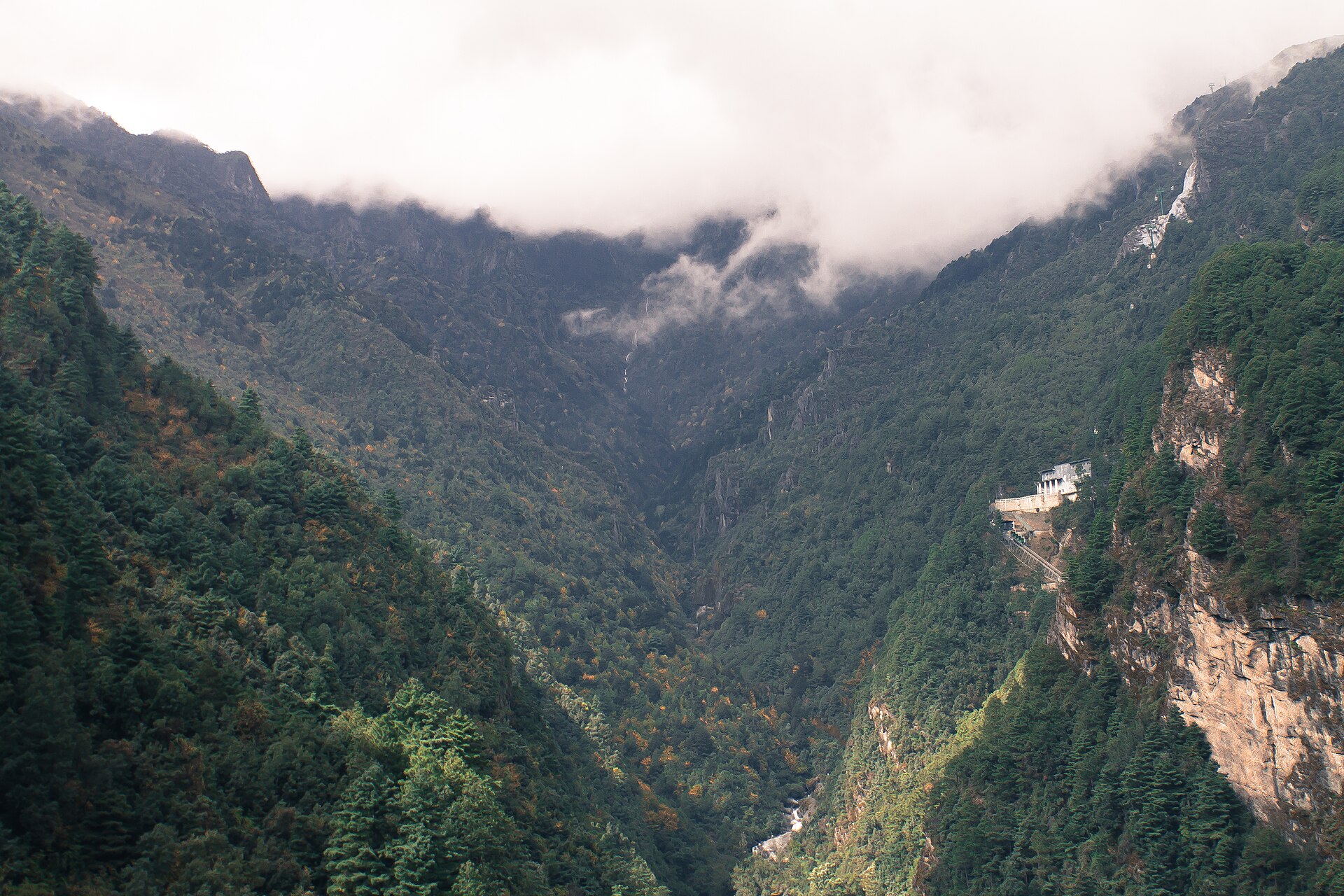
Sometimes I have to remind myself: I do not look at the mountain enough.
My time is limited, after all—certainly my time here.
And the mountain here is very much a mountain, offering no small number of wonders, provided one actually grants it the time.
Through the shifting seasons and the passage of the day, it seems to embody—in its forested slopes and craggy limestone peak—the essence of the myriad things: water and fire, wind and earth, and the interplay of light and shadow that gave the Torah its name.
What, in the end, is a mountain? And how does it differ from me, a passing thing?
We are both just collections of matter and time.
The mountain, too, is scarred by the seasons, by gusting winds and the scorching sun; it, too, finds solace in a mantle of clouds.
And yet, what is the point of staring at a mountain if you cannot grasp its essence?
In Chinese thought, gazing at mountains—or any natural object—was never mere aesthetic pleasure. It was a constant practice of calibration between the human and the world of phenomena. Mountains were seen as concentrations of raw qi, visible symbols of persistence, seclusion, and inner transformation.
In the three great traditions, the mountain is never just a mountain. It serves as a symbol of sovereign authority, a focal point where man and peak are equal partners in a world of flux, and a promising arena for internal change.
The observer did not seek to capture something objective—for such a thing hardly exists—but rather to resonate with the spirit and rhythm, the silence and the capacity for change inherent in an element as seemingly stable as a mountain. In this sense, the mountain becomes both mirror and teacher.
In painting and poetry, the goal was not a realistic copy of reality, but an expression of 'spirit resonance' (qiyun shendong)—that inner vitality pulsing through the landscape and the mind of the observer at once. The brushstroke is merely the visible tip of an intuitive process, drawing from a resonance with the myriad things, both hidden and revealed.
Perhaps the Song Dynasty master Liang Kai understood this best. The artistic legacy he left behind traces a trajectory of distancing himself from the mire of the imperial capital—a process of shedding and release until nothing remained that was not gaunt, naked, and exposed to the elements. In his work, the human body itself becomes a reflection as thin as dew, composed only of matter and time.
It is no wonder, then, that the wisest act one can perform is the act of withdrawal. 'Entering the mountain' (ru shan) traces a path toward the status of the immortal (xian), where the thin but stable boundary between man and mountain, internal and external, slowly dissolves into the mist.
You can contemplate trees for days on end and never predict where the branches will rise.
You can dwell beside water for years, yet never hold a single bowl of it forever.
You can stare at rocks for half a lifetime and never internalize how they endure.
Instead, you can only look deep within, find creation there, and know the one who sits in delight and wonder.
Related writing
Essay
Between Mysticism and Revolution: The Poetry of Khomeini
On Persian verse, mystical insight, and the fine line between spiritual transcendence and political authority.
Field Note
The Ginger Garden
On gardening, rhizomes, and a small botanical obsession in a Dali courtyard.
Essay
Rivers and Lakes
“When the springs dry up, the fish huddle together, gasping to keep one another moist; it would be better if they could forget each other in the rivers and lakes.” (Zhuangzi)