Field Note
By Noam Backner
The Road to Heaven
Modern recluses in the Zhongnan Mountains and the ancient promise of freedom found in the high peaks.
Many of the monks we once knew on the mountain have since drifted away or left for further studies; even the former pugilist-recluse has moved on. It was heartening, then, to find Brother L. still rooted in place. I first met him when he was a new arrival, a mere candidate for the monkhood. Now over fifty and without family, he seems to have finally found his footing. Clad in full monastic robes, he possessed a quiet dignity and a visible happiness in his mountain home.
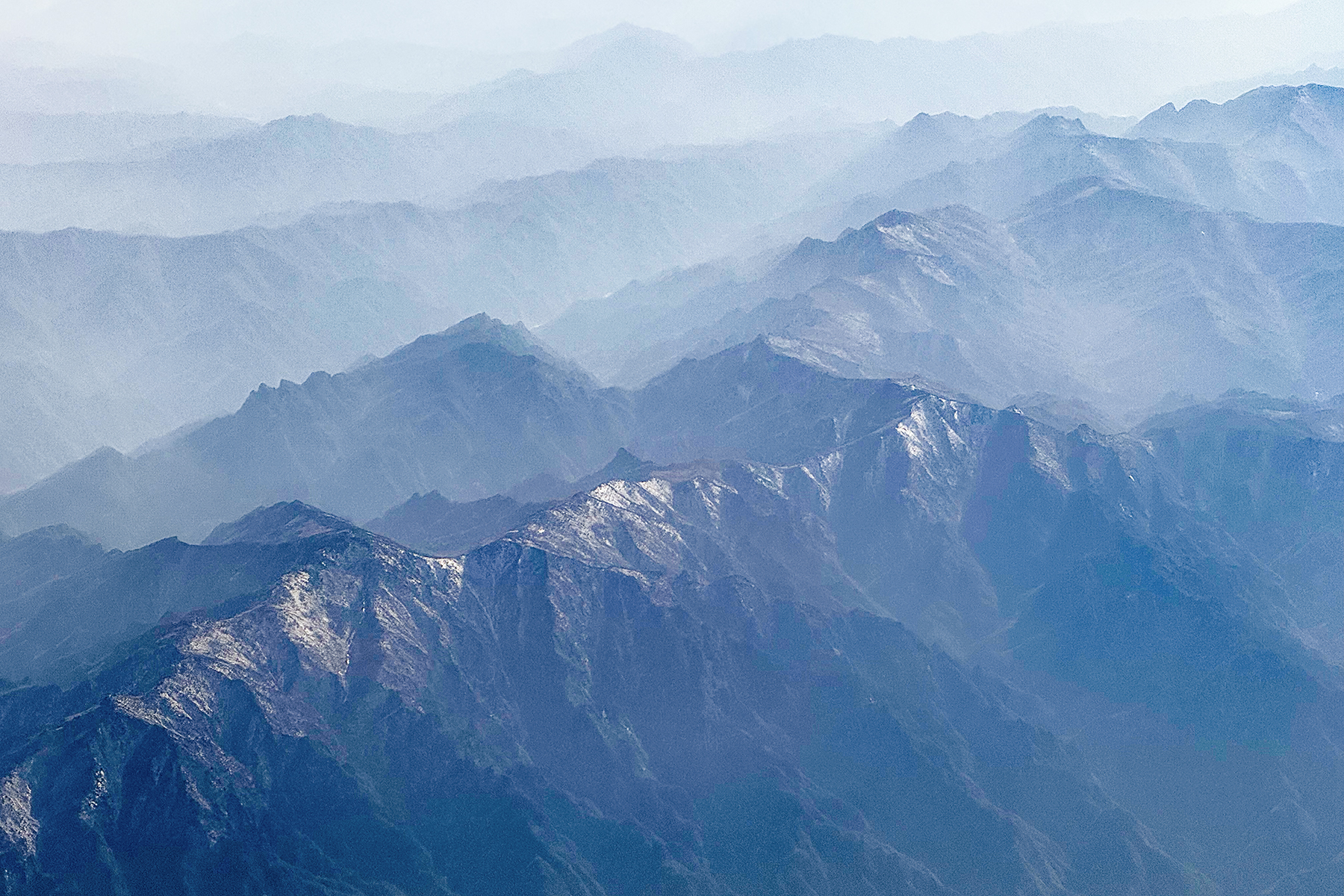
In the late 1980s, the writer and translator Bill Porter—better known by his pen name "Red Pine"—set out for the Zhongnan Mountains south of Xi'an. He wanted to see if the hermit tradition, a cornerstone of Chinese culture, had survived the upheavals of the twentieth century. At the time, the consensus was that the Cultural Revolution, the destruction of religious institutions, and the political pressures of the Mao era had driven Chinese eremitism to the point of extinction.
To his surprise, Porter found that deep within the cliffs, tucked into mountain huts and ruined temples, Buddhist monks and Taoist recluses were still there. They lived scattered across the range, dedicated to study, practice, and a quiet withdrawal from the world. His findings were published in "Road to Heaven," which became a foundational text on China's hermit heritage. Ironically, the book's translation into Chinese helped spark a renewed hermit movement among its local readers.
When Porter returned to the mountains more than twenty years later, he found a community that had tripled in size and transformed in character. Alongside elderly monks trained in the old ways, there were now university graduates, former businessmen, artists, and professionals—many of them women—seeking an alternative to the grind of modern urban life. Some sought to deepen their Buddhist or Taoist practice; others simply looked for stillness and spiritual meaning in a world drowning in competition, consumerism, and an endless cacophony of information. The Zhongnan Mountains became a symbol for this shift—a spiritually vibrant space where a modern Chinese person could imagine a life far from the sterile rhythm of the megacity.
Life on the mountain is not for the faint of heart. Many drop out and retreat to the foothills, and some even perish on the trails. Yet the novice recluse can still rely on veterans for help finding a small plot of land or a site for a hut, and for the essential knowledge of medicinal plants and the hard art of surviving the first winter.
The profile of the Chinese monk has evolved. While the previous generation often came from rural backgrounds with little formal schooling—a byproduct of the destruction of traditional learning—today’s monasteries are home to young people with academic degrees, foreign language skills, and a mastery of technology. Some manage websites, lead nationwide charitable activities, or run online study groups.
The general public maintains an ambivalent attitude toward them. Monks are viewed as guardians of tradition and moral authorities, yet this respect is tempered by skepticism toward religious institutions. For this reason, many see the mountain recluse—living in a remote hut, face hidden and far from the spiritual limelight—as the true embodiment of a religious ideal and the only direct link to China's ancient hermit tradition.
The Zhongnan recluses are not a fleeting remnant of the past, but the continuators of a path stretching back two millennia. Since antiquity, these mountains have been a structured space of retreat, maintaining a delicate, ambivalent relationship with both the rural communities at their feet and the dynastic centers further downriver.
In this sense, the mountain world of the recluses sits at the heart of a complex structure, bridging the centers of power with that which lies beyond the very concept of power. The peaks offer an ancient degree of freedom available to any Chinese person, provided they dare to cross the threshold and ascend the Road to Heaven.
Related writing
Essay
Between Mysticism and Revolution: The Poetry of Khomeini
On Persian verse, mystical insight, and the fine line between spiritual transcendence and political authority.
Field Note
The Ginger Garden
On gardening, rhizomes, and a small botanical obsession in a Dali courtyard.
Essay
Rivers and Lakes
“When the springs dry up, the fish huddle together, gasping to keep one another moist; it would be better if they could forget each other in the rivers and lakes.” (Zhuangzi)