Essay
By Noam Backner
The Chinese Hamburger
From ancient 'barbarian bread' to the modern Big Mac: how China absorbed the Western sandwich into its own culinary soul.
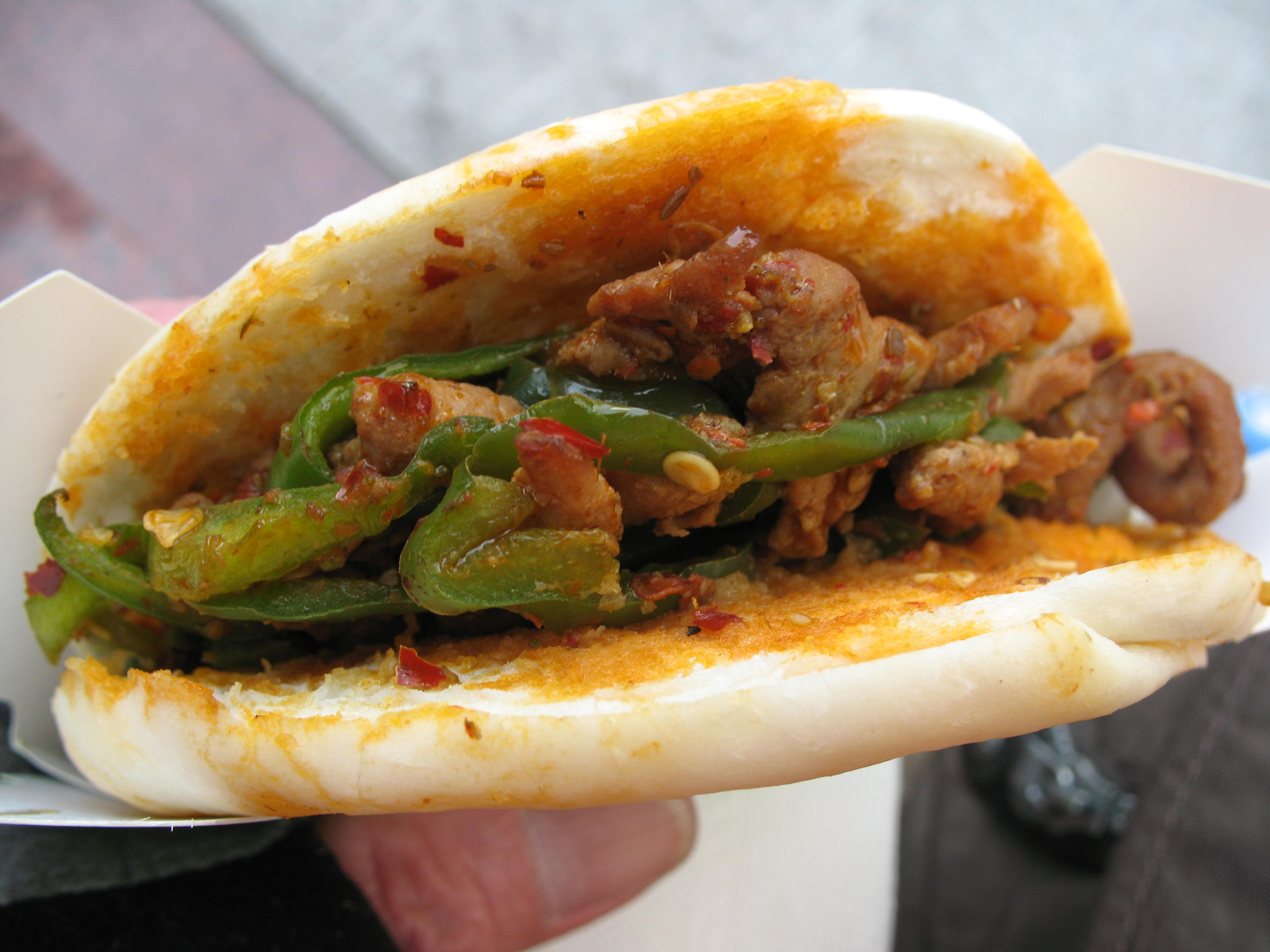
Before moving to Yunnan, we took one last walk through Beijing’s hutongs. As we wandered the narrow alleys, our conversation eventually drifted from the city's urban fabric to the more visceral pleasures of the palate—specifically, the world of dough.
Chinese cuisine is ancient, diverse, and far more canonical than the immigrant-driven cooking of the United States. Yet it responds just as naturally to questions of class, geography, and cultural adoption—a tendency that has only sharpened under the pressures of globalization.
This led us to the curious status of the hamburger in China. As is often the case here, the phenomenon is best understood by breaking it down into its constituent parts. China has a long-standing tradition of baked doughs and meat fillings; whether served open like a sandwich or fully encased, these dishes are defined by strict regional and technical boundaries.
Baking arrived relatively late to the Chinese kitchen. A historical preference for boiling and steaming, a chronic scarcity of fuel, and a proximity to Central Asia meant that the primary baking technique in the central plains was—and remains—the tandoor style of China’s neighbors. Early versions of these pastries were known as "barbarian bread" (húbǐng), carrying with them the exotic flavor of an even earlier era of globalization.
To make up for this technical simplicity, China offers its trademark regional variety. Northern China, in particular, boasts a dizzying array of baked doughs that vary by folding technique, fat content, choice of filling, and the specific style of the bake.
Dishes like Rou Jia Mo and Shao Bing, filled with pork, beef, or even donkey meat, became staples for every level of northern society. These sit alongside golden-crusted delicacies like Beijing’s "Door Nail" meat buns and the crispy, lard-layered scallion pancakes that have since spread across the country.
This is the landscape the Western hamburger entered. Its inclusion of fresh vegetables, pickles, mayonnaise, and sweet sauces allowed it to land successfully on ancient tongues, offering something genuinely new. While local social textures ensured that KFC and its imitators found far more success in China than McDonald’s or Burger King, the hamburger as a concept still carries the modern, globalist cachet that aided its absorption here, just as it has everywhere else.
The Chinese "hamburger" is still evolving. Even as it begins to incorporate Sichuan peppercorns, durian, or fermented bean sauce, these are simply new layers added to an ancient foundation of dough—a dish that seems capable of embracing the entire world.
Related writing
Essay
Between Mysticism and Revolution: The Poetry of Khomeini
On Persian verse, mystical insight, and the fine line between spiritual transcendence and political authority.
Field Note
The Ginger Garden
On gardening, rhizomes, and a small botanical obsession in a Dali courtyard.
Essay
Rivers and Lakes
“When the springs dry up, the fish huddle together, gasping to keep one another moist; it would be better if they could forget each other in the rivers and lakes.” (Zhuangzi)