Essay
Which Sky Would I Choose?
‘My heart was asked: Which heaven would you choose? It replied: The wise do not speak.’ — Omar Khayyam
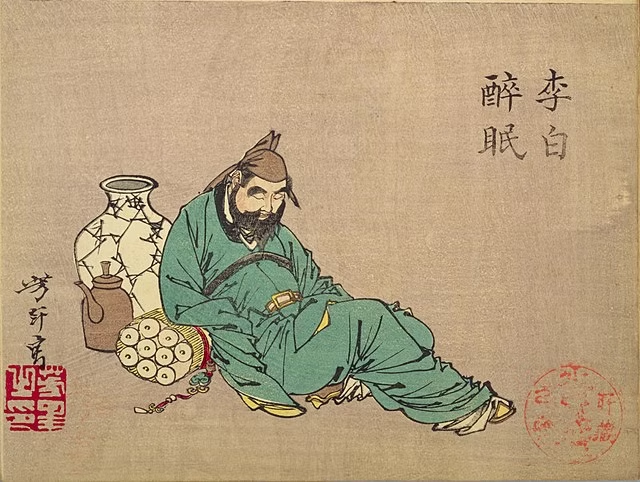
During a late-night courtyard conversation over local rice wine, with music from the Middle East playing through a battered speaker, someone suddenly suggested that Li Bai—one of the two great poets of the Tang dynasty—was, in fact, an Iranian poet of wine.
Given the life and times of the poet, the suggestion did not sound entirely implausible. It is still worth examining with some care. I am no great reader of poetry, but Li Bai is widely known as the poet of drunken wonder beneath the moon. His voice carries a distinct echo of Omar Khayyam’s much later quatrains, and, to some extent, of other Persian poets of ecstasy.
The idea—even as a thought experiment—that Li Bai might represent an early Chinese expression of the Persian tradition of wine and ecstasy rests on his birthplace, cultural background, lyrical style and philosophical outlook.
Like many of the anonymous and celebrated figures who populate the social history of the Tang dynasty at its eighth-century height, Li Bai was not born in China proper. He was born far to the west, on the shifting frontier of what Chinese histories call the Western Regions: those strange, foreign expanses that then encompassed the edges of the Gobi and Taklamakan deserts, the high Tian Shan and the grasslands beyond.
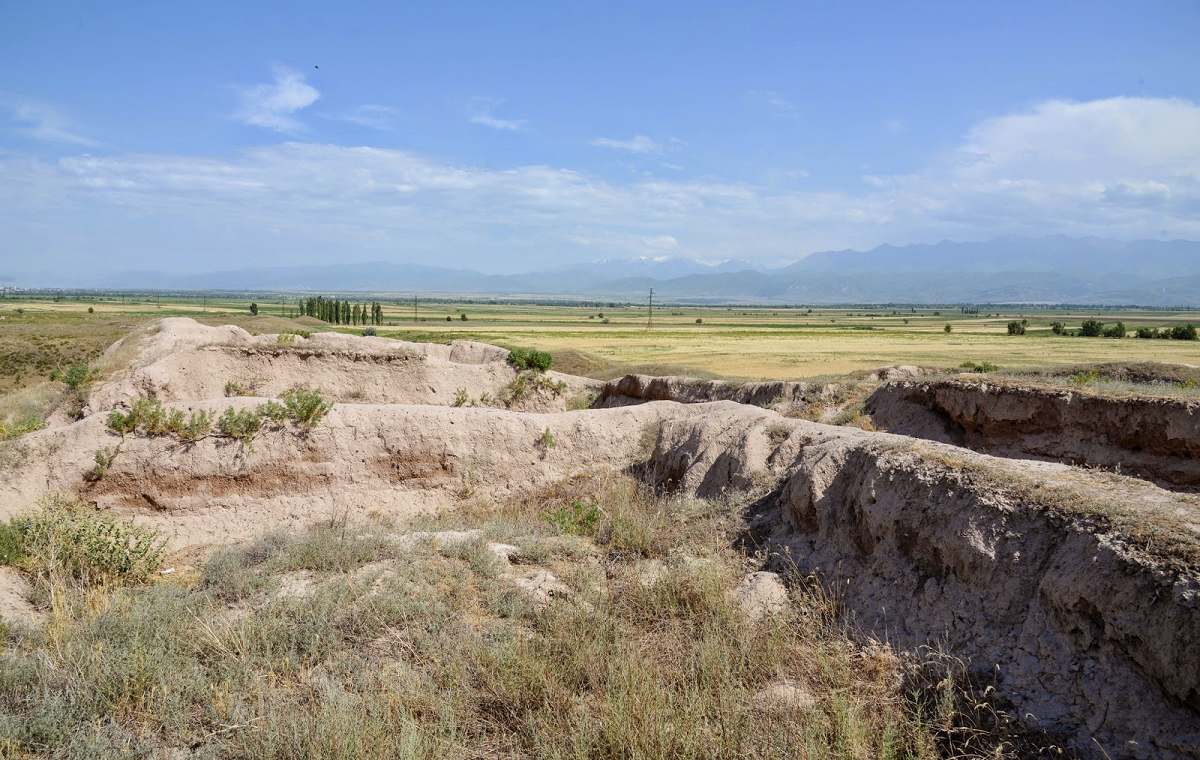
Most early biographies place his birth near Suyab, in what is now eastern Kyrgyzstan. The evidence for his ethnic origins is obscure at best, although he is commonly presented as the son of a Han Chinese merchant or official. The tendency to describe him as ‘Chinese’ in the modern sense, both by birthplace and ancestry, becomes more pronounced in later biographies.
Suyab was partly a Chinese military outpost, but in character it was an Inner Asian city. For most of its history, it was a typical frontier settlement where Iranian, Turkic and Chinese populations mingled in varying proportions. Even if we assume that Li Bai’s father was Chinese, there are reasonable grounds for thinking that his mother may have been Central Asian. Chinese women were scarce in the western borderlands, and historical and archaeological evidence points to extensive intermarriage between Tang officials and local women.
The Li family reportedly moved to the Sichuan Basin while the poet was still a young child. This allowed him to grow up within the world of Tang elite culture. His proximity to courtly circles appears to have given him an excellent education, literacy in at least two languages and access to early Daoist circles. As was common then, and remains so today, this did not prevent him from maintaining close relations with Buddhist clergy or with officials inclined towards Confucian thought, especially during his years around the imperial court.
We may therefore conclude, with due caution, that Li Bai was well educated from an early age and came from a mixed cultural background with both Chinese and Central Asian elements. In the absence of substantial biographical detail, we do not know the nature of his relationship with either parent, and it is difficult to discern the precise cultural shades of the world from which he emerged.
The central question, then, is whether we can trace a stylistic, thematic or other connection between Li Bai’s poetry and the traditions of wine verse found across Central Asia and Greater Iran—and whether Persian poetry and Li Bai’s work share an identifiable pre-Islamic root.
Wine and other intoxicants certainly appear in the lyrical traditions of pre-Islamic Central Asia. Yet they seem to belong chiefly to religious hymns, heroic songs of victory and the highly developed banquet culture of the early Iranian world. Central Asian feasting was among the exotic customs brought to the Tang courts by migrants from the Western Regions. Poetry of withdrawal, however—with or without drunken transcendence, and with wine as either subject or metaphor—appears to have developed among Iranian poets only after the Islamic conquest, the revival of Persian in Bukhara and Ghazna, and the consolidation of the canonical Persian poetic genres. Those genres may have drawn on older mystical and ecstatic sensibilities, but they did not assume this form until around the twelfth and thirteenth centuries.
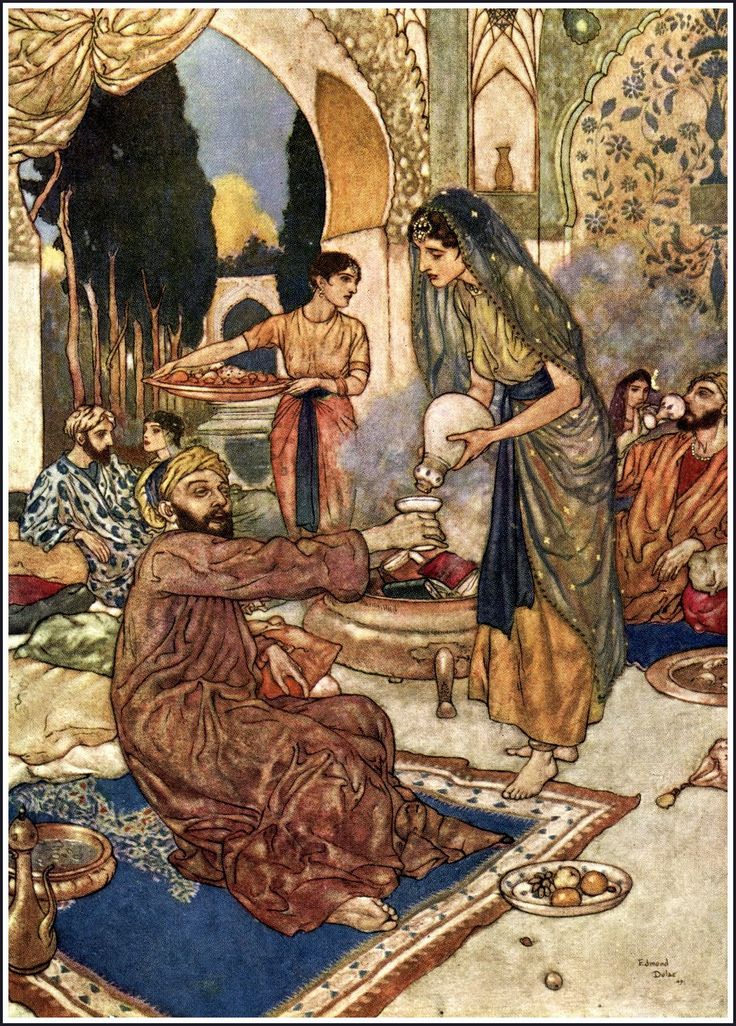
The resemblance in imagery is tempting, but it remains largely superficial. The social, religious, didactic and philosophical starting points of Khayyam—and of later poets such as Hafez and Rumi—differ markedly from those of Li Bai, Du Fu and their earlier companions beyond the mountains and deserts.
If, with some regret, we must abandon the alluring idea that Li Bai and his friends were silk-robed, drunken proto-Sufis, we may take comfort in China’s venerable ecstatic tradition of withdrawal. Its metaphysical, social and psychological foundations are both ancient and robust, and it was strengthened and enriched by successive waves of migration and cycles of destruction and creation over two thousand years.
Perhaps withdrawal, whether real or imagined, is possible chiefly within a complex, stratified society crossed by many paths. The pressures, temptations and dangers of such a world create the compelling tension between service and escape, transcendence and rigid social obligation. Poets of retreat and wine—Li Bai, Omar Khayyam and others—stand as distant, luminous emblems of a gentle yet well-considered philosophical detachment. A sheltered garden, a protective wall, a misty mountain or an eccentric way of life allows the sober drinker to look upon human reality in its full light: with a faint smile, yet with profound empathy.
And since we have wandered into the history of drinkers, perhaps we might instead regard Omar Khayyam and several others as Persian-speaking heirs to the Chinese poetic tradition. They might not have objected too strongly to the comparison. Cheers, and Shabbat shalom.
Related writing
Essay
Jewish Traders on the Silk Roads
An eighth-century Judeo-Persian letter from Khotan offers a rare view of Jewish trade and daily life amid war in the heart of Asia.
Essay
Demons, Saints and Black Pens
Muhammad Siyah Qalam and the Eurasian world the Mongols left behind.
Essay
In the Gates of Turan
Why the Shahnameh's oldest quarrel is an ecological one: the sown land against the sea of grass.