Essay
By Noam Backner
The Fifth Month and the Dragon Boats
On the most perilous month of the Chinese calendar, protective rites, Qu Yuan, and the pendulum swinging between sickness and health, order and chaos.
In traditional China, the fifth month was a time of ill omens and the destructive terror of malevolent spirits—a fateful season that invited disease, disaster, and other incidental evils.
As the spring warmth followed the winter chill, the high population density of ancient China and close contact with livestock traditionally triggered outbreaks of plague, typhus, dysentery, and various other epidemics.
To ward off these scourges, the people of the Middle Kingdom performed protective rites: they hung medicinal herbs like Chinese mugwort (Artemisia argyi) on doorframes to deter evil, carried fragrant sachets, drank medicinal wine, lit incense, and performed rituals to maintain the proper alignment between Heaven and Earth.
As is so often the case in Chinese culture, the events of the month—known today in the West as the "Dragon Boat Festival"—are linked to the formative Warring States period, specifically to the life and death of Qu Yuan (d. 278 BCE). A poet, diplomat, and man of virtue, Qu Yuan became entangled in malignant court intrigues and ultimately drowned himself in the Miluo River.
Long did I sigh and wipe away my tears, So grieved by the frailty of man. At dawn, scorn was cast upon me, By evening, I found myself cast out. Yet my heart remains forever loyal, And even now stays firm and steady. Before nine deaths I have stood, Yet I harbor no regret at all, For the integrity of my heart I have held fast.
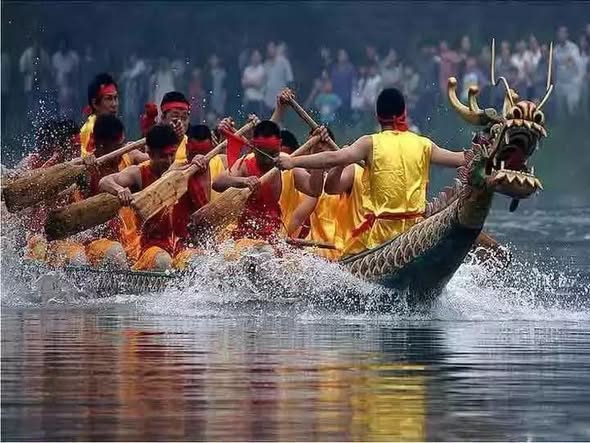
Today, the famous dragon boat races—a memory of the loyal farmers who rushed to rescue Qu Yuan—have become the holiday's hallmark, along with the eating of zongzi (sticky rice dumplings). These were originally thrown into the river as bait, intended to appease the fish and evil spirits who coveted his body.
For the Chinese diaspora, the festival remains a marker of the cosmic pendulum that swings between proximity and distance, health and sickness, prosperity and sorrow, peace and war, and order and chaos.
So, a happy holiday; may the dragon be ever at your side. Just beware of excess dampness and, perhaps most of all, court intrigues.
Related writing
Essay
Between Mysticism and Revolution: The Poetry of Khomeini
On Persian verse, mystical insight, and the fine line between spiritual transcendence and political authority.
Field Note
The Ginger Garden
On gardening, rhizomes, and a small botanical obsession in a Dali courtyard.
Essay
Rivers and Lakes
“When the springs dry up, the fish huddle together, gasping to keep one another moist; it would be better if they could forget each other in the rivers and lakes.” (Zhuangzi)