Essay
By Noam Backner
The Hall of Idleness
A return to Yunnan and reflections on the labor of sloth, the weight of purpose, and a poem by Bai Yuchan.
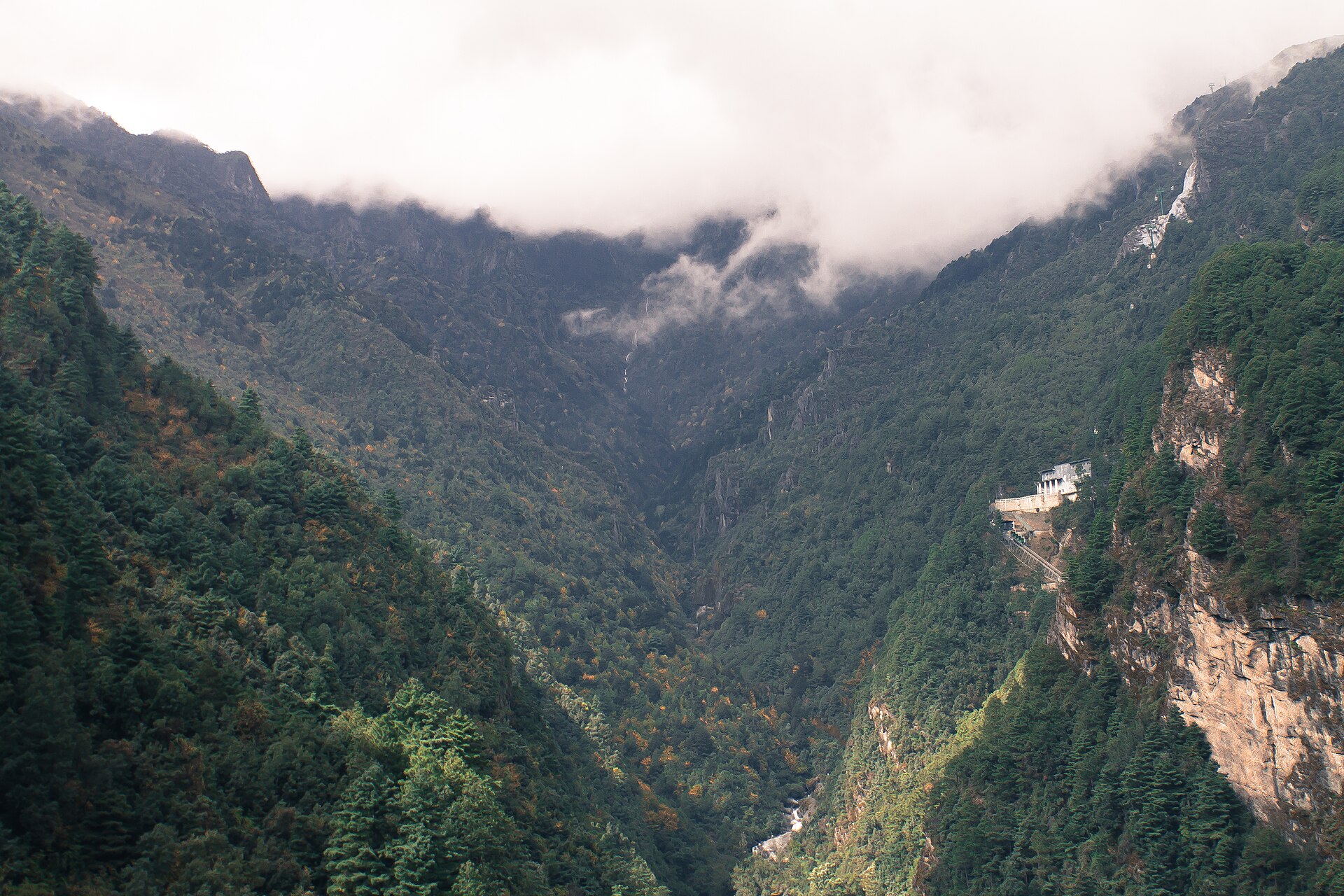
Returning to Yunnan after more than a month of road dust—and arriving just as the rains begin—feels right in more ways than one.
Beyond the usual clichés of 'non-doing,' I have only recently begun to grasp what my first teacher, E., meant when he claimed that idleness requires effort. He argued that existence, at least in its adult form, is little more than a relentless sequence of administrative chores. For anyone who actually wants to live, the best one can hope for is a state of relaxed efficiency.
The Chinese, predictably, have much to say on the matter. While a didactic culture demanding constant action is ingrained in every person here from birth, a certain ideological freedom in idleness remains available to anyone—provided they have first settled their debts to society.
It is no surprise that Dali serves as a landmark for this ancient tension between sloth and service. The city is the unofficial capital of 'Tang Ping' (Lying Flat) culture—the quiet counter-movement of the industrial East, where the young drift in search of a life free from pressure, commitment, and the machinery of production. There are others here, too, of a more traditional stripe: businessmen, doctors, and other 'successes.' They follow a more classical model of amateur retirement, retreating to the countryside for a month or a year to drink tea with friends, tend to eggplants, or engage in the purposeful lounging afforded by the Yunnan sun.
As a strange barbarian, I enjoy the immunity of the outsider, yet I try to remain an absent observer of it all. The concentrated effort of leading tours across China allows me to imagine I am part of that traditional genre; the exhausting Yang days earn me the right to retreat during the rains to a cooler, more tolerable corner. Here, I can process whatever needs processing under the clouds, in the company of an eternal teapot.
As we drift toward idleness, we might find reinforcement from the ancients, who, even in their dim light, managed to trace a path.
I am too lazy to leaf through volumes, for the Way is not trapped in the skin of books.
I have poetry, but I am too lazy to compose it;
In the hour of silence, words pass to the other side.
I have a stringed instrument, but I cannot be bothered to pluck it;
The melody dies anyway, upon the very string of its birth.
I have a chess set, but I am too lazy to play;
Beyond the board of black and white, I have no time for waging wars.
I am too lazy to gaze at mountains and rivers;
For within my heart dwells, securely, a complete painting.
I am too lazy to stand before the crescent moon and stars;
For within me, the island of the immortals stands.
I am too lazy to meddle in the affairs of the world;
For within me, a hut and a field already exist.
Pines shall wither, rocks shall fade,
And I shall remain at the source, in suchness.
Is it not fitting to call all this
The Hall of Idleness?
Lazily adapted from a poem by Bai Yuchan (1194–?)
Related writing
Essay
Between Mysticism and Revolution: The Poetry of Khomeini
On Persian verse, mystical insight, and the fine line between spiritual transcendence and political authority.
Field Note
The Ginger Garden
On gardening, rhizomes, and a small botanical obsession in a Dali courtyard.
Essay
Rivers and Lakes
“When the springs dry up, the fish huddle together, gasping to keep one another moist; it would be better if they could forget each other in the rivers and lakes.” (Zhuangzi)